
Raise the Roof: Creative Online Fundraising Campaigns That Work
Why Online Fundraising Campaigns Are Essential for Modern Nonprofits

Online fundraising campaigns have transformed how nonprofits connect with supporters and generate revenue. Whether you're launching your first digital campaign or looking to improve existing efforts, understanding the fundamentals is critical to success.
Quick Answer: What Makes Online Fundraising Campaigns Effective?
- Clear Goals - Define specific, measurable targets for donations and donor acquisition
- Compelling Stories - Share real beneficiary stories that create emotional connections
- Optimized Forms - Keep donation pages mobile-friendly and simple (3-5 fields maximum)
- Multi-Channel Promotion - Leverage email, social media, and paid ads to reach supporters
- Trust Signals - Display security badges, testimonials, and transparent impact metrics
- Recurring Options - Make monthly giving easy to build sustainable revenue streams
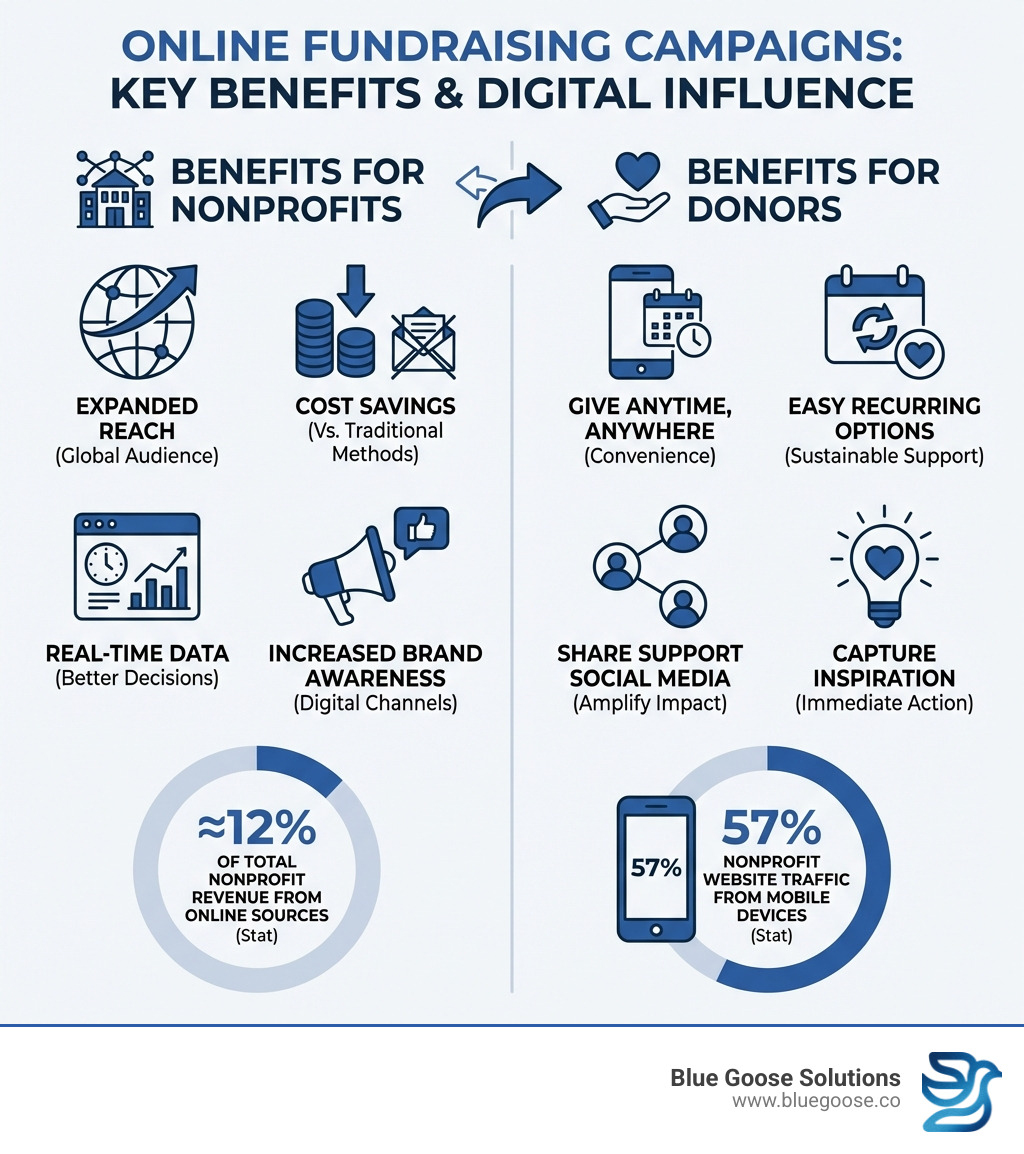
Digital fundraising offers nonprofits expanded reach beyond local communities, significant cost savings compared to traditional methods, and real-time data for better decision-making. Around 12% of total nonprofit revenue now comes from online sources, with 57% of nonprofit website traffic coming from mobile devices. Yet many organizations struggle to create campaigns that convert visitors into donors.
The landscape has shifted dramatically. After pandemic-influenced growth, average online revenue dropped in 2022 by 4%, signaling that nonprofits need fresh strategies to stand out. Success requires more than just setting up a donation page--it demands strategic planning, compelling storytelling, technical optimization, and consistent donor engagement.
The benefits extend to donors too. They can give anytime from anywhere, set up recurring donations effortlessly, and share their support on social media. For nonprofits, this means capturing donations at the moment of inspiration, building stronger relationships through data, and increasing brand awareness across digital channels.
I'm Jason R.L Wallace, Chief Marketing Officer at Blue Goose Solutions, and I've spent 15 years helping mission-driven organizations build trust and secure support through strategic digital engagement--including designing and executing successful online fundraising campaigns for government agencies, national nonprofits, and community organizations. In this guide, I'll share proven strategies and creative campaign ideas that work in today’s competitive digital landscape.
The 4-Step Blueprint for Launching a Successful Online Fundraising Campaign
Launching a successful online fundraising campaign isn't just about putting a donation button on your website; it's about strategic planning, thoughtful execution, and continuous optimization. We've distilled the process into a four-step blueprint to guide your efforts.
Developing Your Strategy for Online Fundraising Campaigns
Before diving into the "how," we need to define the "why" and "what." This is where strategy comes in.
- Set Clear Goals: Start by defining what success looks like. Your goals should be SMART: Specific, Measurable, Achievable, Relevant, and Time-bound. Are you aiming for a certain dollar amount, a specific number of new donors, or increased engagement? Having clear objectives provides a roadmap for your online fundraising campaigns.
- Budgeting for Impact: Every nonprofit budget is different, but a well-planned budget is crucial. Determine your revenue goals and the amount you're willing to invest to achieve them. This might include costs for platform fees, marketing, or personnel. Investing strategically can lead to a healthy return on investment (ROI).
- Audience Segmentation: Not all donors are the same, and neither should your messages be. Segmenting your audience based on demographics, giving history, interests, and communication preferences allows for highly personalized and effective outreach. This approach ensures your message resonates with the right people at the right time.
- Donor Journey Mapping: Understand the path your donors take from awareness to donation and beyond. Where do they first encounter your organization? What information do they need to make a decision? How do you keep them engaged after they've given? Optimizing this journey, especially the critical touchpoints like your donation page, is vital for boosting conversion rates.
- Craft a Compelling Message: Facts inform, but stories inspire. At the heart of every successful campaign is a compelling story. Use a classic storytelling structure:
- Protagonist: Introduce a relatable character or community in need.
- Conflict: Describe the challenge or problem they face.
- Resolution: Show how your organization, through donor support, provides the solution and creates impact. Focus on the donor's role in the resolution, highlighting their impact rather than just your organization's efforts.
- Define Key Performance Indicators (KPIs): Beyond just the total amount raised, track metrics like donation volume, conversion rate (how many visitors complete a donation), and average gift size. These KPIs offer valuable insights into campaign effectiveness and areas for improvement.
Choosing the Right Online Fundraising Platform
Selecting the right platform is like choosing the right tools for a construction project--it makes all the difference.
- Evaluate Needs vs. Budget: List the essential features your organization requires. Do you need peer-to-peer fundraising, crowdfunding, text-to-give, or mobile bidding tools? Then, consider your budget. While some platforms may offer free basic services, they might lack the advanced features necessary for comprehensive online fundraising campaigns.
- Compare Software Features: Look for platforms that offer:
- Optimized online donation pages
- Text-to-give solutions
- Crowdfunding platforms
- Peer-to-peer fundraising software
- Livestreaming solutions for virtual events
- Mobile bidding tools for online auctions
- Employer matching gift databases
- Robust reporting and data analytics
- Integration with your existing donor management system (CRM)
- Understand Fee Structures: Be clear about transaction fees, platform fees, and any hidden costs. Some platforms charge a percentage of donations, while others have monthly subscriptions. We always recommend platforms that are transparent about their fees and offer good value for the features provided.
- Request Demos: Don't just read reviews; see the platforms in action. Request demos to understand the user experience for both your team and your donors. Ask about customer support and training resources.
12 Creative Online Fundraising Campaign Ideas to Inspire You
Now for the fun part! Once your strategy is solid and your platform is chosen, it's time to get creative. Here are 12 proven online fundraising campaigns that can help you raise the roof for your cause.
- Peer-to-Peer (P2P) Fundraising: This powerful model leverages your supporters' networks. Individuals create personalized fundraising pages and ask their friends and family to donate. It works because people are more willing to donate to a cause if it's recommended by someone they know. In fact, 39% of Americans say they’ve donated to a charity because of a request from a family member or friend.
- Crowdfunding: This involves creating a campaign page and collecting small contributions from a wide range of supporters for a specific project or need. Unlike P2P, crowdfunding typically uses a single donation page, though it can also earn social shares.
- Social Media Challenges: These viral campaigns encourage participation and sharing. A famous example, the ALS Ice Bucket Challenge, boosted the ALS Association's annual research funding by 187%. Challenges like a virtual 5K, a fitness challenge (e.g., 10,000 steps a day), or a hair-related challenge can be highly engaging.
- Virtual Events: From online galas to virtual concerts, these events open up participation beyond geographical limits. They can include live streaming, interactive elements, and online auctions.
- Matching Gift Drives: Encourage donors to check if their employer offers a matching gift program. An estimated $4-$7 billion in matching gifts goes unclaimed each year. Promoting these programs can significantly boost your revenue.
- Online Auctions: Move your traditional auction online! This allows supporters to bid from anywhere, expanding your reach. Invest in online auction software that lets you display items with descriptions and accept bids seamlessly.
- Merchandise Sales: Create branded merchandise (t-shirts, mugs, hats) and sell them through an online store. This generates revenue, promotes brand awareness, and gives supporters a tangible item to show their pride.
- Giving Days: These are intense, short-term fundraising bursts, typically lasting 24 hours. Giving Tuesday is the world’s largest giving day, bringing in billions of dollars for causes each year. Launching a focused online fundraiser with a clear theme and marketing campaign can drive significant results.
- Text-to-Donate Initiatives: A text-to-donate campaign can be incredibly effective for mobile engagement. Supporters text a keyword to a dedicated number, receiving a link to a mobile-optimized donation form. With 99% open rates and 90% of messages read within three minutes, text communications offer unparalleled immediacy.
- Influencer Campaigns: Partner with social media influencers who align with your mission. They can promote your campaign to their engaged audiences, dramatically increasing your reach and credibility. For example, a celebrity partnering with a major brand to donate to disaster relief efforts can generate massive public support.
- eCard Campaigns: Donors make a gift to your nonprofit, then send an eCard to a friend or loved one, informing them about the donation made in their honor. This boosts both donations and awareness.
- Video Fundraising: Compelling videos that tell a story and show impact can be incredibly powerful. A video showcasing a beneficiary's journey and ending with a clear call to action can deeply resonate with potential donors.
Leverage Virtual Events and Challenges
Virtual events and challenges have become cornerstones of online fundraising campaigns, allowing organizations to engage supporters regardless of location.
- Virtual 5K/Walk-a-thon: Participants register online, complete a 3.1-mile run or walk from their neighborhood or home, and track their progress using fitness apps. They can raise funds through pledge fundraising or an entry fee. To build community, encourage participants to share their times and photos in a dedicated online group. Events like the St. Jude's walk/run allow for remote participation with online registration and fundraising leaderboards.
- Online Trivia Night: A themed trivia night can be a fun and engaging virtual event. Charge an entry fee, offer prizes, and use a platform like Pinterest for creative theme ideas and trivia questions.
- Virtual Concert: Host a virtual concert with local musicians, charging a ticket fee or encouraging donations during the livestream. These can be particularly effective with sponsorships from local businesses to cover overhead costs.
- Social Media Challenges: Beyond the Ice Bucket Challenge, consider fitness challenges (e.g., jump-roping, cycling 100 miles in a month) or creative challenges (e.g., art, writing). The "Stand Up for Ukraine" movement, which united a global community through a social media rally and resulted in billions raised, showcases the incredible power of viral campaigns.
Harness the Power of Community and Urgency
Building a sense of community and creating urgency are powerful motivators in online fundraising campaigns.
- Peer-to-Peer Fundraising: As mentioned, this is a highly effective way to tap into personal networks. When a friend or family member asks us to support a cause, we're often more inclined to give. Provide your P2P fundraisers with easy-to-use tools, templates, and encouragement to share their efforts.
- Crowdfunding Campaigns: For specific projects, crowdfunding can rally a community around a shared goal. Make sure your campaign page is visually appealing, tells a clear story of impact, and has a specific, achievable goal. Promoting a hard end date can inspire immediate giving.
- Giving Days: These timed events, like Giving Tuesday, create a powerful sense of urgency and collective action. Pre-promote heavily, use countdown timers, and share real-time progress to build excitement. Consider aligning specific giving amounts with tangible impacts (e.g., "$50 provides a week of meals").
- Matching Gift Drives: Many companies offer corporate matching gift programs, matching their employees' donations to eligible nonprofits. We can help you identify match-eligible donors and provide tools to make it easy for them to submit their matching gift requests, ensuring you don't leave billions of dollars unclaimed. The American Red Cross, for instance, has a dedicated landing page devoted to sharing matching gift information, making it simple for donors to research their eligibility.
Maximizing Your Impact: Promotion, Optimization, and Retention
A brilliant campaign idea is only as good as its execution and reach. Maximizing your impact means promoting effectively, optimizing the donor experience, and retaining those valuable supporters.
Leveraging Social Media for Online Fundraising Campaigns
Social media is a dynamic space for online fundraising campaigns, especially with younger demographics.
- Facebook Fundraisers: Encourage supporters to create Facebook fundraisers on your behalf, especially birthday fundraisers. Facebook is a significant driver of social giving, with 56% of donors inspired by social media saying it has the biggest impact on their decision. Provide clear instructions and shareable content for your advocates.
- Instagram Donation Stickers: Instagram also allows supporters to create fundraisers in their bios and share them in stories, posts, and live videos. The largest demographic on Instagram, similar to Facebook, is between 25 and 34.
- TikTok Trends: With 60% of its users being Gen Z, and users spending an average of 95 minutes on the platform daily, TikTok offers immense potential. Actively engage with trends, use Donation Stickers in live streams, and post regularly to connect with this highly engaged audience. Gen Z is 10 times more likely than Boomers to share their donations on social media, creating organic opportunities for peer-to-peer advocacy.
- Creating Shareable Content: Develop visually appealing content that highlights your impact and can be easily shared. User-generated content (UGC), where supporters share their own stories and reasons for giving, is incredibly powerful. Encourage UGC through specific hashtags and contests.
- Influencer Marketing: Partnering with influencers can amplify your message. Provide them with key talking points and stunning visuals, allowing them to personalize the message for their audience.
- Best Times to Post: Research the best times to post on social media for your audience to maximize visibility and engagement. Many social media management tools offer insights into optimal posting times.
Using Email and Paid Ads to Drive Traffic
Email marketing and paid advertising are essential tools for driving traffic to your online fundraising campaigns.
- Email Marketing: Email remains a cornerstone of donor stewardship when used strategically. Segment your communications based on supporter behavior, interests, and giving history to deliver relevant, personalized content. Our team follows nonprofit email marketing best practices, which emphasize personalization, clear calls to action, and compelling storytelling.
- Google Ad Grants: Take advantage of Google Ad Grants for nonprofits, which provides up to $10,000 monthly in free advertising. This is a game-changer for reaching potential supporters who are already searching for causes like yours.
- Keyword Research: Use tools like Google Keyword Planner to find keywords related to your cause that receive high search traffic. For example, a local shelter might target "donate to local homeless shelters" or "support animal rescue."
- Compelling CTAs: Your ad copy and email subject lines need to be engaging and include strong calls-to-action (CTAs) that encourage clicks and donations.
Optimizing Donation Forms and Retaining Donors
The final step in the donor journey is often the most critical: the donation form. An optimized form can significantly increase conversion rates and foster long-term relationships.
- Mobile Optimization is Non-Negotiable: With 57% of nonprofit website traffic coming from mobile devices, and approximately 28% of online donations made on mobile, your donation page must be mobile-friendly. This means it automatically adjusts to different screen sizes and has buttons large enough for easy tapping.
- Simple, Single-Page Forms: Every additional field on a donation form increases the likelihood of abandonment. Keep it short and sweet, asking only for essential information (name, email, payment details). Consider using multi-step forms to make the process feel less overwhelming.
- Suggested Giving Amounts: Guide donors by offering suggested donation amounts that align with your organization's mission and clearly illustrate the impact of each tier (e.g., "$25 provides a warm meal," "$100 supports a month of after-school programs").
- Recurring Donation Options: Make it easy for donors to set up recurring gifts (e.g., monthly, quarterly). This is crucial for donor retention and provides a stable, predictable revenue stream. Promote this option prominently on your donation page.
- Embed Matching Gift Tools: Integrate a matching gift database directly into your online donation form. This allows donors to instantly check their eligibility and submit requests, maximizing their impact and your revenue.
- Post-Donation Engagement: Your relationship doesn't end with the donation. Promptly thank donors, share impact reports, and continue to communicate your mission. This builds loyalty and encourages future giving.
- Measuring Success: Continuously track KPIs related to your donation forms, such as conversion rates, average gift size, and recurring donor sign-ups. Use this data to iterate and improve.
The Future of Giving: Emerging Trends in Digital Fundraising
The digital landscape is constantly evolving, and so are the tools and strategies for online fundraising campaigns. Staying ahead of these emerging trends can give your organization a significant advantage.
- Artificial Intelligence (AI): AI is moving beyond experimental applications to become a practical tool for nonprofits. Recent studies show that many nonprofits have integrated AI into their communications (58%) and use it for data analysis (68%). AI can power predictive analytics (identifying potential major donors), automate personalized communications, streamline grant writing, and improve donor journey mapping. We believe in integrating AI tools that improve our team's capabilities rather than adding complexity, and always with transparency and ethical considerations in mind.
- Cryptocurrency Donations: This form of digital currency is gaining traction among a younger, wealthier demographic. According to research, the average crypto donor is a Millennial or Gen Z (average age 38) with an average income of $110,000, significantly younger and wealthier than the average traditional donor. Establishing a process to accept crypto donations can position your organization at the forefront of modern philanthropy.
- Donor-Advised Funds (DAFs): A donor-advised fund (DAF) is a charitable giving account managed by a public charity. Donors contribute assets, receive an immediate tax deduction, and can recommend grants to their favorite nonprofits over time. Promoting DAFs can tap into significant giving capacity, as growing numbers of donors use them for their tax benefits and investment growth potential.
- Text-to-Communicate: Beyond text-to-donate, utilizing SMS for broader communication is on the rise. With 99% open rates and 90% of messages read within three minutes, text messaging offers unparalleled immediacy for time-sensitive updates, event reminders, and engagement, allowing for a direct and quick line of communication with supporters.
- Livestream Fundraising: Integrating fundraising directly into live video content (e.g., Twitch, YouTube Live, Facebook Live) is growing. This allows for real-time engagement, interactive donation appeals, and a more dynamic fundraising experience, often appealing to younger, digitally native audiences.
Conclusion: Build Your Next Successful Campaign
The world of online fundraising campaigns is vibrant, dynamic, and full of potential. From the benefits of expanded reach and cost-effectiveness to the power of compelling storytelling and strategic optimization, the opportunities to connect with donors and advance your mission are immense.
We've explored the blueprint for success: developing a robust strategy, choosing the right tools, leveraging creative campaign ideas like virtual events and matching gift drives, and maximizing your impact through multi-channel promotion and donor retention. We've also peered into the future, noting the rising importance of AI, cryptocurrency, and DAFs in shaping the next generation of giving.
At Blue Goose Solutions, we specialize in helping purpose-driven organizations like yours steer this exciting landscape. We clarify your message, grow your reach, and build the support you need, offering flexible support models from strategic coaching to full-scale implementation. We understand the unique challenges and opportunities faced by mission-based teams, and we're passionate about helping you succeed.
Don't let the evolving digital world overwhelm you. Accept it, strategize wisely, and tell your story with passion. Let us help you open up the full potential of your online fundraising campaigns.
