
Beyond the Numbers: Inspiring Annual Report Design Examples
Why Annual Report Design Matters More Than Ever

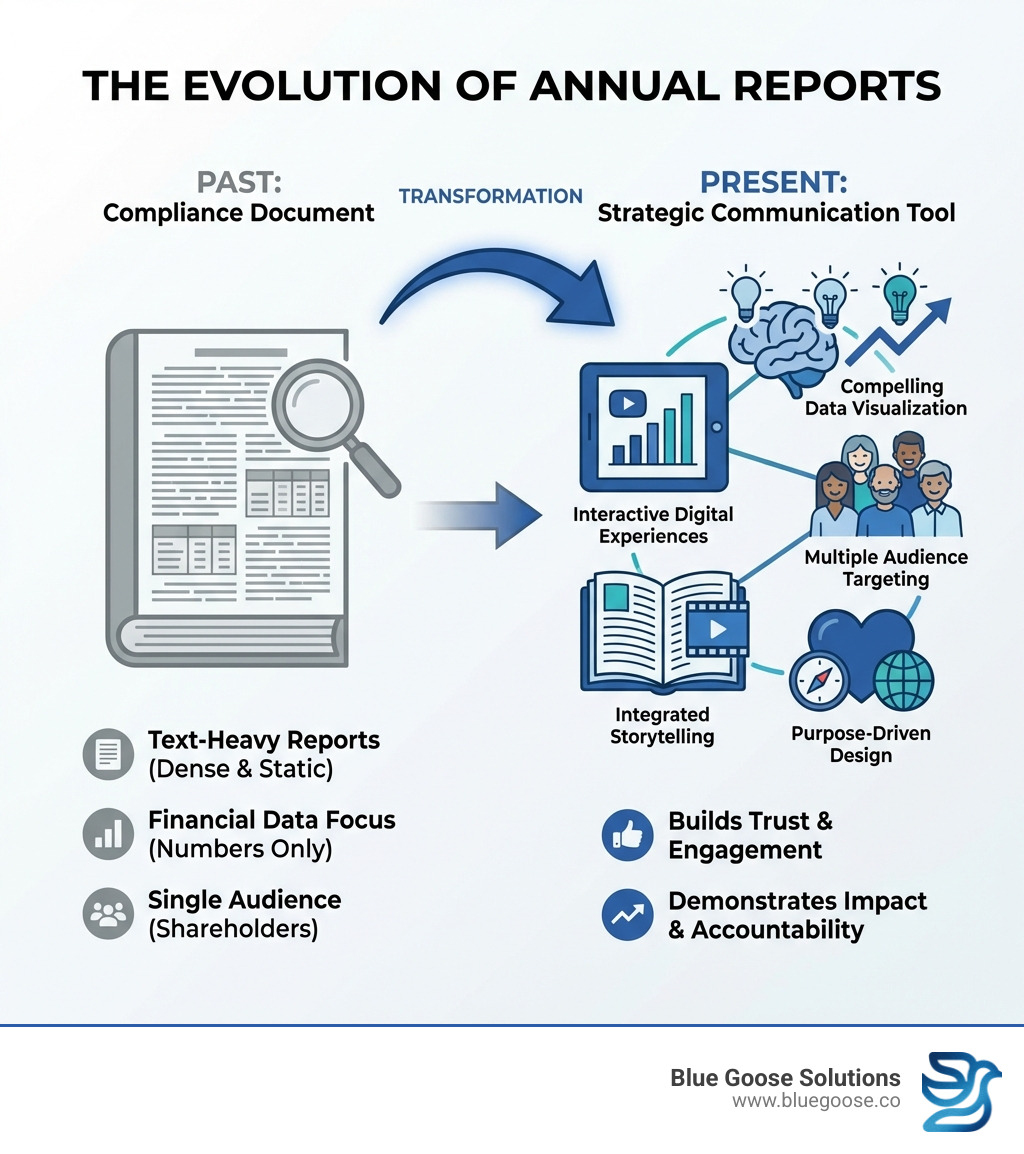
Annual report design has evolved from a compliance checkbox into a powerful communication tool. Today's reports must inform, engage, and inspire multiple audiences--from shareholders and donors to employees and the public. Here's what makes effective annual report design:
- Clear visual hierarchy that guides readers through complex information
- Data visualization that transforms numbers into compelling stories
- Brand consistency that reinforces organizational identity and values
- Strategic storytelling that connects mission to measurable impact
- Accessible formats (print, digital, interactive) that reach diverse stakeholders
- Professional execution that builds trust and credibility
The numbers tell the story: design has become a key factor in whether a report is downloaded, read, and shared--or left gathering digital dust. With annual reports regularly surpassing 300 pages, the first few pages serve as your "shop window," determining whether busy stakeholders will engage with your content at all.
Gone are the days when creative concepts stopped at the governance section and shareholders were the only audience that mattered. As research shows, 86% of companies now clearly state their purpose upfront, and 38% present fully integrated strategies that incorporate broader stakeholder interests. The shift is clear: annual reports are no longer just about financial compliance--they're about building trust, showcasing your best work, and demonstrating accountability to everyone who cares about your mission.
I'm Jason R.L Wallace, and throughout my career advising nonprofits, government agencies, and mission-driven organizations, I've seen how strategic annual report design transforms stakeholder engagement and amplifies organizational impact. Whether leading national initiatives at the NIH or guiding municipal programs in DC, effective visual communication has been essential to building public trust and demonstrating measurable results.
In this guide, you'll find inspiring examples across corporate, nonprofit, and public sector organizations--plus practical insights on choosing formats, working with designers, and ensuring your report is accessible to all audiences.
Key Principles of Effective Annual Report Design
At Blue Goose, we believe that an impactful annual report design starts with a deep understanding of its purpose and audience. This isn't just a document; it's a strategic communication piece.
First and foremost, we adopt an audience-first approach. Twenty-five years ago, annual reports primarily targeted shareholders. Today, a company’s annual report needs to inform, excite, and inspire multiple audiences. This means considering the distinct needs of shareholders, donors, employees, and the general public. For instance, shareholders might prioritize financial performance and growth projections, while donors are more interested in impact stories and how their contributions are making a difference. Employees, on the other hand, might look for insights into company culture, strategic vision, and their role in collective achievements.
Next, we focus on establishing clear objectives. Without clearly defined goals, an annual report can become a mere "tick box exercise." What key messages do you want to convey? What action do you want your audience to take? These questions guide the entire design process, ensuring every element serves a strategic purpose.
Once objectives are clear, we dive into the key design elements:
- Typography hierarchy: This isn't just about choosing pretty fonts; it's about guiding the reader's eye. A well-established typographic hierarchy helps segment copy into digestible parts, highlighting key information and making even dense reports feel manageable. Readability is paramount, especially when dealing with complex financial data.
- Color psychology: Colors are powerful. They evoke emotion and reinforce brand identity. A consistent and thoughtful color palette, often derived from your brand guidelines, helps create visual cohesion and can subtly influence how your audience perceives the information. For example, a non-profit might use warm, inviting colors, while a financial institution might opt for more authoritative blues and greens.
- Layout and white space: Imagine trying to read a textbook with no paragraphs or margins – daunting, right? Effective layout uses grids, ample white space, and clear sections to create visual breathing room. This improves readability and allows key information to stand out. It's about structuring the report so that readers can easily steer and find what's relevant to them, especially in reports that can exceed 300 pages. As one expert put it, the first few pages are your "shop window" – they need to draw the audience in.
- Data visualization best practices: This is where numbers transform into narratives. Visuals improve clarity, increase memory retention, and make a greater impact. Instead of overwhelming readers with tables of figures, we use charts, graphs, and infographics to present data effectively.
Here's a quick comparison of how effective data visualization can make a difference:
| Ineffective Data Visualization | Effective Data Visualization |
|---|---|
| Dense tables of raw numbers | Clear, concise bar charts |
| Unlabeled pie charts | Labeled pie charts with percentages |
| Overly complex graphs | Simple, focused line graphs |
| Text-heavy descriptions | Infographics with key takeaways |
| Inconsistent styling | Branded colors and typography |
Making Complex Financial Data Engaging
Let's be honest: raw financial data can be intimidating. Our goal in annual report design is to make it accessible and engaging.
- Infographics for impact: Infographics are our secret weapon for changing complex information into bite-sized, visually appealing content. Whether it's a breakdown of revenue streams, allocation of funds, or year-over-year growth, a well-designed infographic can convey insights at a glance. They make data easier to access and remember, especially for time-poor readers who might only skim the report.
- Charts and graphs clarity: Beyond infographics, clear and well-labeled charts and graphs are essential. They should be easy to understand, with clear titles, legends, and data points. We ensure that the visual representation accurately reflects the data, avoiding any misleading distortions.
- Using callouts and annotations: Important figures or key takeaways can get lost in a sea of text. Callouts, bold headers, and annotations draw attention to these critical pieces of information, ensuring they are seen and absorbed.
- Visual storytelling with data: Data isn't just numbers; it represents your organization's journey and impact. We use design to show progression, highlight achievements, and illustrate trends. For instance, a growth chart isn't just showing numbers; it's telling a story of hard work and success.
- Balancing numbers with narrative: While data is crucial, it needs context. We weave the numbers into a broader narrative, explaining what they mean and why they matter. This balance ensures that your report is both informative and emotionally resonant.
Integrating Your Brand and Values
Your annual report is a direct reflection of your organization. Therefore, integrating your brand and values seamlessly into the design is non-negotiable.
- Consistent branding: Every element, from the cover to the last page, should align with your brand guidelines. This includes your logo, brand colors, fonts, and imagery. Consistency builds recognition and reinforces your identity.
- Logo and color palette usage: Your brand's logo should be prominently featured, and your established color palette should be used throughout the report. This creates a cohesive look and feel that instantly identifies the document as yours.
- Tone of voice in copy: The language used in the report should match your brand's tone of voice. Is your organization formal and authoritative, or warm and approachable? The design should complement this verbal tone, creating a unified experience.
- Photography and illustration style: The visual assets you choose are powerful storytellers. High-quality photography that reflects your mission and values, or custom illustrations that add a unique touch, can significantly improve the report's appeal. For example, the Toronto Symphony Orchestra's annual report used expressionist brushstrokes to convey the passion and fluidity of music, creating a unique visual identity.
- Communicating purpose and mission: As observed in recent trends, 86% of companies now clearly state their purpose upfront. Your annual report is a prime opportunity to communicate your "why." Design can visually articulate your mission, making it more tangible and inspiring.
- Showcasing company culture: Beyond financials, stakeholders want to understand the heart of your organization. Use imagery and narratives that showcase your company culture, your people, and the values that drive your work. This helps build deeper connections and trust.
Inspiring Annual Report Examples by Type
The world of annual report design is dynamic, constantly evolving to meet new communication demands. We've seen a shift from purely functional documents to engaging storytelling platforms.
Some prevalent design trends we observe include:
- Minimalism: Clean lines, ample white space, and a focus on essential information create a sophisticated and easy-to-digest report.
- Bold typography: Using strong, distinctive fonts for headings and key statements can add personality and impact.
- Interactive elements: For digital reports, interactive charts, embedded videos, and clickable navigation improve engagement significantly.
- Sustainable materials: For print reports, there's a growing emphasis on eco-friendly paper and printing practices, reflecting a commitment to environmental responsibility.
Crafting a Compelling Corporate Annual Report Design
For corporations, an annual report design is a critical tool for building investor confidence and showcasing strategic direction.
- Clarity and professionalism: Corporate reports demand a high level of precision and a professional aesthetic. The design must convey trustworthiness and stability. We ensure the first page offers a succinct company profile and mission statement, setting the stage for the detailed information to follow.
- Building investor confidence: Investors seek transparency and a clear understanding of performance and future strategy. Design helps by making complex financial information easy to steer and comprehend. Charts, infographics, and bold headers are essential for this.
- Showcasing strategy and growth: Beyond raw numbers, corporate reports should illustrate the strategic vision that drives growth. Design can visually represent market positioning, new initiatives, and future outlook.
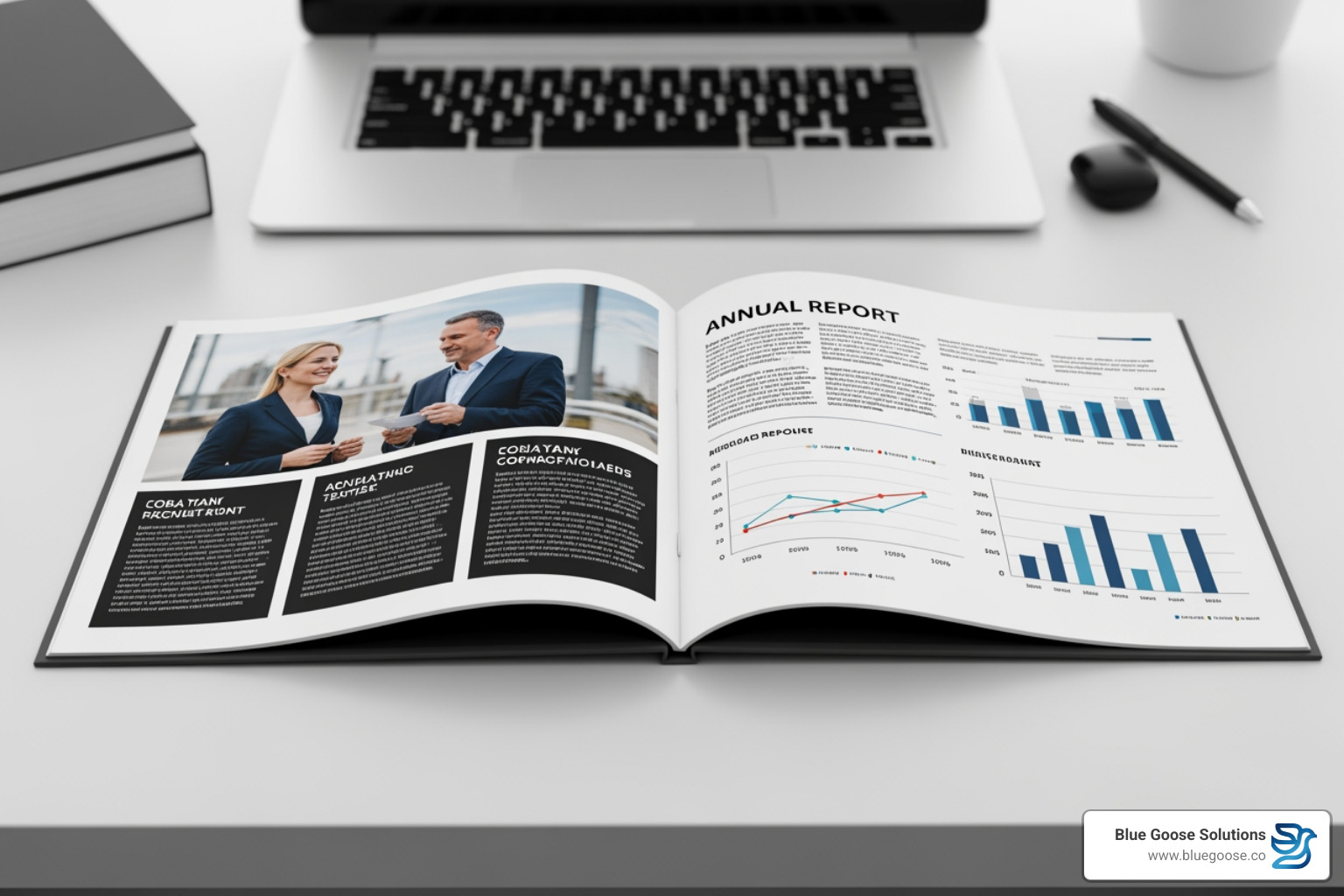
A great example of balancing data and photography comes from Associated British Foods. Their print design effectively balances photographs and text with clear iconography and data visualization, getting right to the heart of the matter. Similarly, Sberbank's 2019 annual report used extensive icons, charts, and illustrations to effectively illustrate the expansion of their "synergetic ecosystem of sub brands," showcasing a futuristic and innovative approach to illustrating complex business ecosystems.
Innovative Nonprofit Annual Report Design
Nonprofit organizations have a unique opportunity with their annual report design: to connect emotionally with their audience and demonstrate the tangible impact of their work.
- Focus on impact and mission: For nonprofits, the report isn't just about financial health; it's about fulfilling a mission. Design should highlight the stories of those impacted and the positive change created.
- Connecting with donors emotionally: Donors are driven by passion and a desire to make a difference. The report should inspire and reassure them that their contributions are valued and effective. This means showcasing accomplishments and conveying appreciation for their support.
- Demonstrating accountability: Nonprofits must clearly outline their financial state and accomplishments, showing how funds are used responsibly. This builds trust and encourages continued support. For more insights on this, read our article on Nonprofit Marketing: Separating Fact from Fiction.
One inspiring example is the Toronto Symphony Orchestra's annual report concept. It uses expressionist brushstrokes throughout to represent the dynamic music, conveying passion, fluidity, movement, and freedom—a beautiful way of illustrating their core mission. Another creative, cost-effective format was seen in Amnesty International Hong Kong's 2011 report, constructed as a newspaper to highlight their 50th anniversary. This design choice made the report engaging and encouraged readers to pick it up and scan it like the day’s news, using bright highlights to draw attention to key details.
From Page to Pixel: Formats, Tools, and Accessibility
The choice of format for your annual report significantly impacts its design and reach. We've moved far beyond just printed pages.
- Choosing the right format: The decision between print and digital, or a hybrid approach, depends on your audience, budget, and desired impact.
- Print vs. digital: While print reports offer a tactile experience and can feel more substantial, digital reports provide unparalleled reach and interactivity. Digital reports offer global distribution without geographical barriers and lower costs compared to printing and distributing hard copies.
- Interactive PDFs: These offer a middle ground, combining the familiarity of a PDF with clickable elements, embedded videos, and improved navigation.
- Microsites and web experiences: For the ultimate interactive experience, a dedicated microsite allows for dynamic content, immersive storytelling, and real-time data updates. It's an opportunity for a truly interactive brand story. The rise of user-friendly digital tools, including no-code web creation tools, has made producing premium annual reports with interactive design components much more accessible, removing technical barriers and reducing timelines and costs. This means even NGOs and smaller businesses can create engaging interactive reports.
Tools of the Trade: Working with Professional Designers
While templates can offer a starting point, the benefits of collaborating with experienced design partners like us at Blue Goose are immense. We specialize in crafting bespoke solutions that truly reflect your organization's unique story and values.
- How Blue Goose Solutions supports your annual report journey: We work with purpose-driven organizations, including nonprofits, public agencies, and CSR initiatives, in the Washington D.C. metropolitan area, including Oxon Hill, Maryland, Alexandria, VA, and Fort Washington. Our expertise lies in clarifying your messages, growing your reach, and building support. We offer flexible support models, from strategic coaching to full-scale implementation, ensuring your annual report design is not only visually stunning but also strategically aligned with your mission.
- Ensuring accuracy and clarity: Precision is crucial, especially with financial data. We employ a rigorous internal QA process and are well-versed in financial language--a common oversight by inexperienced agencies. We also factor in last-minute changes, especially to financials, as they are expected and built into our process. Nothing annoys stakeholders more than errors in an annual report, and we pride ourselves on meticulous attention to detail.
- The value of a custom, expert approach: While templates are useful, they can't capture the nuanced story of your year. We craft designs that are easy to digest, lead the narrative, deliver strategic insight, and are easy to steer. We ensure your report is not just visually appealing but also a powerful communication tool.
Designing for Everyone: Accessibility in Reports
In our commitment to inclusive communication, we prioritize accessibility in annual report design. This means ensuring your report can be easily accessed and understood by individuals with disabilities.
- WCAG guidelines: We adhere to Web Content Accessibility Guidelines (WCAG) for all digital reports. This includes ensuring proper color contrast, text resizing options, and logical reading order.
- High-contrast text: Good color contrast between text and background is vital for readability, especially for those with visual impairments.
- Alt text for images: Every image that conveys information should have descriptive alt text, allowing screen readers to communicate its content to visually impaired users.
- Screen-reader compatibility for PDFs: If delivering interactive PDFs, we ensure they are properly tagged and structured for screen readers, allowing blind or low-vision users to steer and understand the content.
- Clear navigation for digital reports: Intuitive navigation menus, clear headings, and logical page flow are essential for everyone, but particularly for those using assistive technologies.
- Providing multiple formats: Offering your report in various accessible formats, such as large print versions or plain text alternatives, can further improve its reach.
Frequently Asked Questions about Annual Reports
What are the essential components of an annual report?
While the specific content can vary by organization type, several essential components form the backbone of most annual reports:
- Chairman's Letter / Message from Leadership: This sets the tone, provides an overview of the year's performance, and outlines the strategic vision.
- Business Profile / Organizational Overview: A succinct summary of your organization, its mission, and what it does.
- Financial Statements: Detailed financial data, including balance sheets, income statements, and cash flow statements.
- Management Analysis: An explanation of the financial results, significant events, and future outlook.
- Strategic Vision / Future Outlook: Plans and goals for the coming year(s), demonstrating foresight and direction.
- Governance Section: Details on board members, corporate governance practices, and compliance.
- Key Achievements and Impact Stories: Especially crucial for nonprofits, this section highlights successes, milestones, and the tangible difference made.
How can I ensure the design remains accurate with last-minute financial changes?
This is a common challenge, but one we're well-equipped to handle. Here's how we ensure accuracy, even with those inevitable last-minute adjustments:
- Work with designers experienced in financial language: Our team understands the nuances of financial terminology and data. This familiarity helps us process changes efficiently and accurately.
- Use structured templates: We design our layouts with flexibility in mind, using structured templates that allow for easy updates to figures and text without compromising the overall design integrity.
- Build buffer time into your project plan: We always recommend incorporating a realistic buffer into the project timeline. This allows for necessary reviews, approvals, and last-minute data insertions without causing undue stress or rushed errors.
- Implement a rigorous proofreading and QA process: Precision is paramount. We conduct multiple rounds of quality assurance, including detailed proofreading by experienced professionals who specialize in financial reporting. We also encourage clients to use online markup tools for direct PDF commenting and efficient amendment tracking.
How can storytelling be visually conveyed in a report?
Storytelling is at the heart of an engaging annual report, and design is its most powerful vehicle. Here's how we visually convey compelling stories:
- Thematic photography: High-quality, emotive images that capture the essence of your work and the people involved can tell a story without words. For instance, World Vision International's annual report used captivating photos and children's stories to illustrate progress.
- Custom illustrations: Unique illustrations can simplify complex ideas, add a distinctive brand personality, and create a memorable visual narrative.
- A clear narrative arc from start to finish: Just like a good book, an annual report should have a beginning, middle, and end. Design helps create this flow, guiding the reader through the year's journey, challenges, and triumphs.
- Using pull quotes and testimonials: Highlighting key statements or personal stories through visually distinct pull quotes adds human interest and reinforces key messages.
- Infographics that show progress over time: Instead of just static data, infographics can be designed to show trends, growth, and impact over time, visually narrating your organization's evolution.
Transform Your Report into a Powerful Story
As we've explored, annual report design is far more than an aesthetic exercise; it's a strategic imperative. It's about moving beyond a "tick box exercise" to create a document that truly informs, excites, and inspires your diverse audience. A well-designed annual report builds trust, showcases your achievements, and communicates your unique story and values in a compelling way.
At Blue Goose, we understand the power of design in amplifying the impact of purpose-driven organizations. Whether you're a nonprofit in Alexandria, VA, a public agency in Washington D.C., or a CSR initiative in Fort Washington, we're here to help you transform your data into a dynamic narrative. Let us help you craft an annual report that not only meets compliance but also becomes a powerful tool for engagement and support.
