
Beyond the Hashtag: Crafting Powerful Digital Advocacy Campaigns
What is Digital Advocacy and Why is it Crucial?

Digital advocacy campaigns use technology—like social media, email, and online petitions—to mobilize supporters, raise awareness, and influence decision-makers. They're how modern organizations turn passion into action, reach millions, and create measurable social change.
What makes digital advocacy campaigns effective:
- Scalable reach - Instantly connect with supporters across cities, states, or countries.
- Cost-effective - Achieve significant impact with smaller budgets than traditional methods.
- Rapid response - React to breaking news or policy changes in real time.
- Data-driven - Track engagement, identify key supporters, and optimize messaging.
- Community building - Convert one-time supporters into long-term advocates.
In 2020, the Black Lives Matter hashtag was used 3.7 million times per day. The ALS Ice Bucket Challenge raised $115 million. Online petitions that spread on social media are nearly five times more likely to prompt corporate action. These aren't flukes—they're the result of strategic campaigns that move people from awareness to action.
The reality is simple: campaigning is now a constant. With short political terms and urgent social issues, advocacy has become an "always-on" activity. Digital tools make this sustainable.
But a hashtag or petition isn't enough. Effective digital advocacy requires strategic planning, the right tools, compelling messaging, and constant optimization. It means understanding your audience, choosing the right channels, crafting stories that resonate, and measuring what works.
I'm Jason R.L Wallace, Chief Marketing Officer at Blue Goose Solutions. With 15 years of experience building digital advocacy and community engagement strategies—from White House administrations to local equity programs—I've seen how strategic campaigns move policy, mobilize communities, and create lasting change.
This guide will walk you through building, launching, and optimizing digital advocacy campaigns that deliver results—from setting clear objectives to measuring impact.
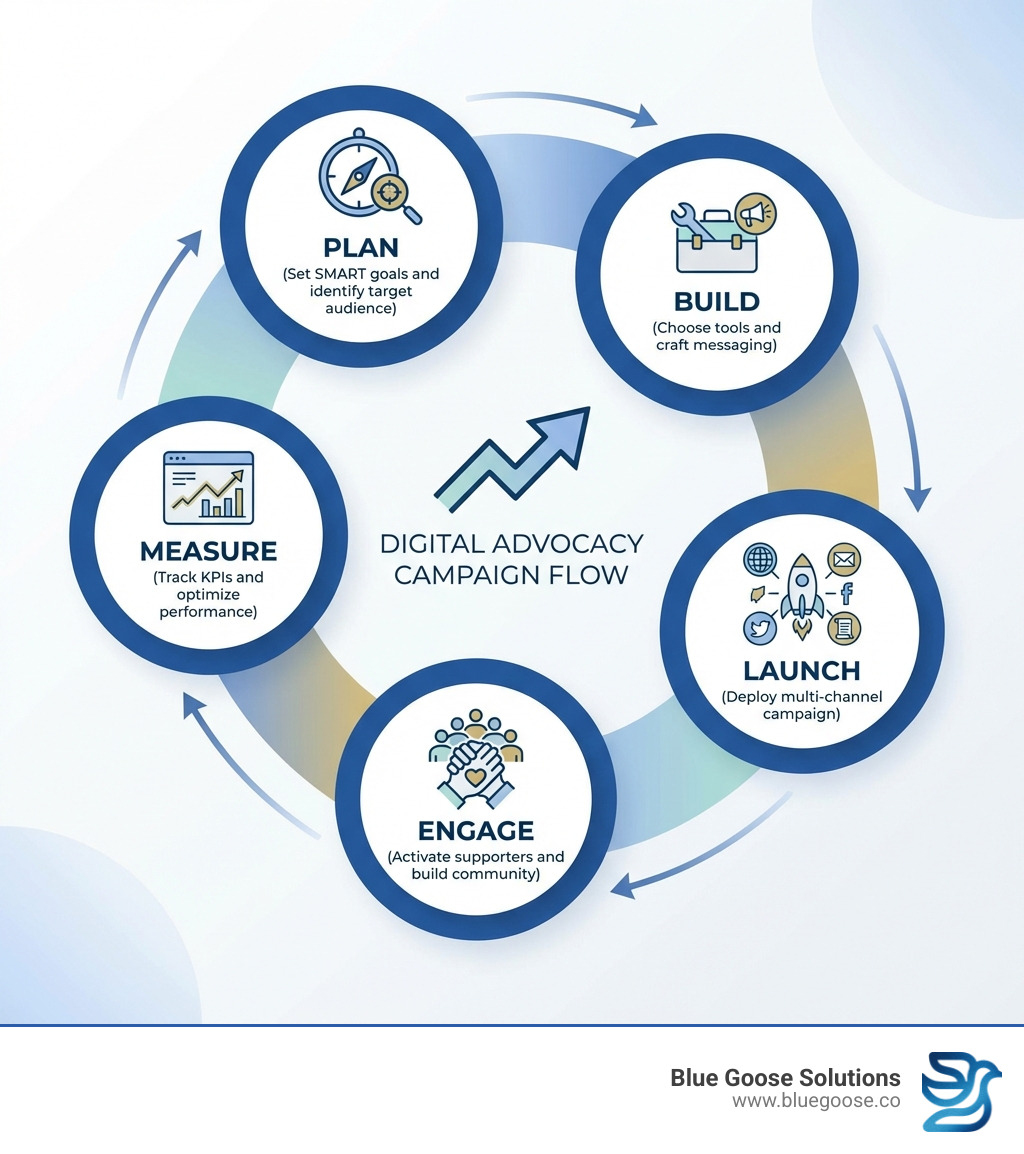
Digital advocacy strategically uses technology to mobilize support for a cause. It leverages online channels like email, social media, and virtual events to connect with people, raise awareness, and influence decision-makers, amplifying a mission-driven message to inspire action.
In today's interconnected world, digital advocacy campaigns are crucial for organizations in dynamic environments like Washington D.C., Maryland, and Virginia. As the political landscape shifts and people spend more time online, a robust digital strategy is essential. It offers advanced targeting, message flexibility, and superior supporter engagement.
Consider the power of online petitions: one study found that petitions gaining traction on social media are nearly five times more likely to prompt a response from Fortune 500 firms, demonstrating the real-world impact of digital tools.
The Core Components of a Campaign
Every successful digital advocacy campaign is built on these fundamental components:
- Clear, Measurable Goals: What are we trying to achieve? Is it influencing legislation, raising awareness, or mobilizing a community?
- Target Audience: Who do we need to reach and influence? This includes the public we want to mobilize and the decision-makers we aim to persuade.
- Compelling Message: Our message must resonate emotionally, be backed by facts, and clearly articulate the problem and solution.
- Clear Call-to-Action (CTA): What do we want people to do? The path to action must be simple and unmistakable.
- Digital Channels: Selecting the right platforms (social media, email, website, SMS) where our target audience is most active.
- Measurement Plan: How will we track progress and determine success? This involves setting up analytics from the start.
Key Benefits for Modern Organizations
Digital advocacy campaigns offer benefits that traditional methods can't match, making them indispensable for purpose-driven organizations.
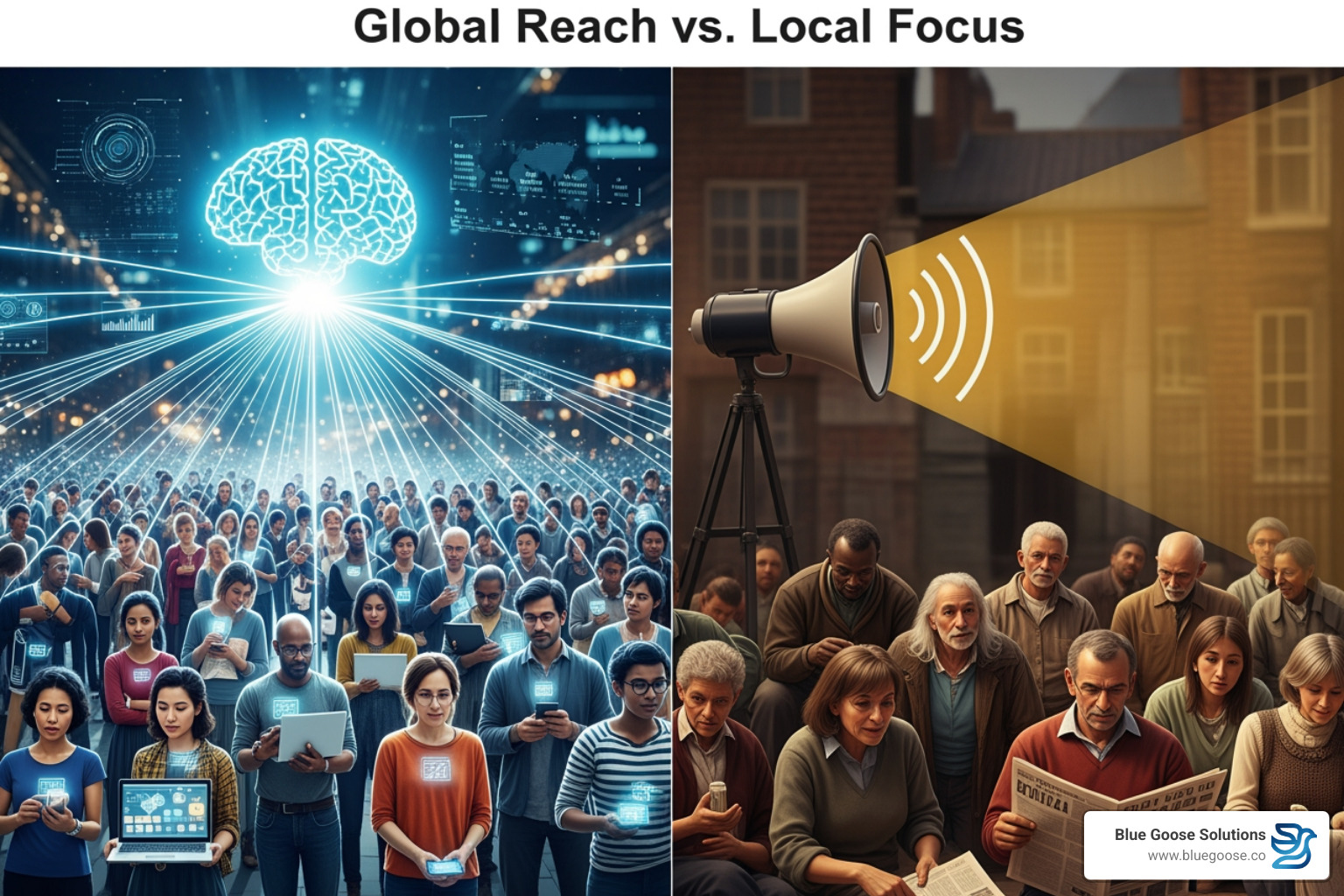
- Broader Audience Reach: Digital channels connect with a vast audience across geographic boundaries, allowing DC-area organizations to reach constituents from Alexandria, VA, to the entire nation.
- Cost-Effectiveness: Digital campaigns achieve significant impact with smaller budgets than traditional lobbying or events, leveraging low-cost tools to spread messages widely.
- Rapid Response: The digital landscape enables swift reactions to breaking news or policy changes, keeping messages timely and relevant.
- Supporter Mobilization: Digital tools make it easy for individuals to take action, empowering supporters to become advocates with just a few clicks.
- Data-Driven Insights: Every click and share generates data, helping us understand what resonates, identify top supporters, and refine our strategies.
- Building Community: Digital platforms create engaged communities around shared causes, turning participants into long-term advocates.
- Scalability: Digital efforts easily scale to meet campaign needs, ensuring flexibility.
- Data Centralization: Advocacy platforms consolidate supporter data, communications, and performance metrics into one place for a holistic view.
Strategic Planning for Maximum Impact
Effective digital advocacy campaigns aren't accidental; they're the result of meticulous planning and strategic foresight. It's about laying a solid foundation before you even think about hitting "send" or "post."

Planning Effective Digital Advocacy Campaigns
The first step is establishing clear, actionable objectives. We recommend using the SMART framework:
- Specific: What exactly do we want to achieve? "Increase awareness" is good, but "Increase sign-ups for our waterway cleanup by 20%" is specific.
- Measurable: How will we track progress? This could be website traffic, petition signatures, or email open rates.
- Achievable: Are our goals realistic given our resources and timeline?
- Relevant: Does this campaign align with our overall mission?
- Time-bound: When do we expect to achieve this goal? A deadline creates urgency.
For example, a clear objective might be: "Mobilize 500 residents in Oxon Hill, Maryland, to contact their local council members about the proposed park development by October 31st."
Beyond objectives, define success metrics and create a realistic timeline and budget. An optimal strategy includes multiple channels and is built on concrete, measurable goals.
Identifying and Segmenting Your Audience
Knowing your audience is as important as your message. Your audience isn't a monolith but a diverse group with varied motivations and digital habits.
- Demographics: Basic data like age and location (e.g., young professionals in Washington D.C. or families in Alexandria, VA) helps identify potential supporters.
- Psychographics: Dig deeper into values, beliefs, and lifestyles to understand what motivates them to care about your cause.
- Supporter Journey: Adapt messaging based on an individual's relationship with your organization, whether they are new contacts, volunteers, or donors.
- Grasstops Advocates: Identify and engage influential individuals with established relationships with policymakers. Their connections can amplify your message and open doors.
- Advanced Audience Targeting: Use digital tools for sophisticated segmentation. Build detailed supporter profiles with demographic and interaction data to tailor messages for effective outreach.
By understanding these nuances, we can craft messages and choose channels that genuinely resonate, maximizing our impact.
Crafting Compelling and Persuasive Messaging
Our message is the heart of our digital advocacy campaigns. It needs to cut through the noise, capture attention, and inspire action.
- Storytelling: Personal stories are more compelling than general narratives. Humanize the issue by sharing real-world impacts to create a powerful, personal connection.
- Emotional Appeal & Factual Evidence: Balance heartfelt stories with solid data. This appeals to both heart and mind, providing a strong rationale for action.
- Clear and Concise Language: With short digital attention spans, messages must be easy to understand, jargon-free, and direct. Ensure your audience understands exactly what you're asking.
- A/B Testing Messages: Test different headlines, calls-to-action, and imagery to see what generates the most engagement.
- User-Generated Content: Encourage supporters to share their own stories and media. This authentic content is powerful, relatable, and inspires others to join.
The Activist's Toolkit: Essential Tools for Digital Advocacy Campaigns
Effective digital advocacy campaigns require the right tools. Just as you wouldn't build a house with only a hammer, your digital toolkit needs variety.
Choosing the right digital advocacy software is crucial. Look for features like campaign customization, real-time reporting, acquisition tools, story collection, and multichannel communication. The right software ensures campaigns launch smoothly, not as a last-minute "fire drill."
The Role of Social Media in Mobilization
Social media has evolved into a global platform for advocacy. It's a cost-effective way to rally support and connect with influencers, with nearly half of advocacy professionals reporting it has significantly impacted their industry.
Table: Social Media Platforms for Advocacy
| Platform | Best For | Audience | Key Tactics |
|---|---|---|---|
| Broad reach, community building, detailed targeting | Diverse; older demographics, community groups | Share stories, use live video, create event pages, and run targeted ads. It remains a top driver of traffic to action centers. | |
| Twitter (X) | Breaking news, rapid response, direct engagement with policymakers/media | News junkies, journalists, political figures, activists | Use relevant hashtags, tag decision-makers, share urgent CTAs, and join trending conversations. |
| Visual storytelling, emotional connection, influencer partnerships | Younger demographics, visually-driven content consumers | Use high-quality images/videos, Stories/Reels, and influencer collaborations. Stories are increasingly effective for engagement. | |
| TikTok | Viral content, youth engagement, creative challenges | Gen Z, younger demographics, entertainment-focused | Create short, compelling videos with trending sounds and challenges. Its viral potential is huge; #EarthHour earned over a billion views in 2021. |
Key Strategies for Social Media:
- Hashtag Strategy: Use a unique campaign hashtag alongside broader, trending tags to expand reach.
- Influencer Collaboration: Partner with online influencers who align with your cause.
- Live Streaming: Use platforms like Instagram Live for real-time discussions and direct engagement.
- Social Listening: Monitor conversations to understand public sentiment, find influencers, and counter misinformation.
- Optimal Posting Times: Research when your audience is most active on each channel to maximize visibility.
Leveraging Email and Action-Oriented Websites
While social media captures attention, email and a dedicated website are often where the deepest engagement and action happen.
Email Systems: Automated email systems are invaluable for supporter engagement. They enable personalized, segmented messaging based on a supporter's journey and preferences. To increase engagement, emails should be personalized, mobile-optimized, and contain clear calls-to-action. For example, one campaign mobilized 2,100 advocates to send 7,000 messages to senators about the Women’s Health Protection Act of 2021, an action fueled by targeted email.
Action-Oriented Websites: A streamlined, actionable website is your campaign's central hub. It must provide clear information, prominent calls-to-action, and a seamless user experience. With most traffic coming from mobile, your site must be mobile-optimized.
Our website should:
- Clearly articulate our mission and the problem we're addressing.
- Feature prominent calls-to-action on every page (e.g., "Sign Our Petition," "Email Your Representative").
- Be intuitive and easy to steer.
- Provide educational resources and data to support our claims.
- Allow supporters to easily share content and take action.
The Power of Online Petitions and Data
Online petitions are a powerful form of digital advocacy, effective at sparking corporate and social change, especially when amplified on social media. Many organizations have driven meaningful change through petition campaigns.
Elements for an Effective Online Petition:
- A compelling title with a clear call-to-action.
- Succinct, persuasive copy explaining the issue and its impact.
- Your organization's logo for credibility.
- An inspiring visual that resonates emotionally.
- A clear, actionable button (e.g., "Sign Now").
- A reminder of who the organization serves.
- A specific, achievable ask directed at a clear decision-maker.
Data Organization and Analysis: Data organization and analysis are critical. Without proper data management, you'll miss trends and opportunities. A well-organized database is crucial for success.
Advocacy platforms provide supporter profiles that track demographics, interaction history, and preferences. This data allows you to:
- Identify your most engaged supporters.
- Segment your audience for highly targeted messaging.
- Understand which tactics are most effective.
- Measure the overall impact of your campaigns.
- Generate reports for stakeholders.
Leveraging data enables informed decisions that optimize campaigns for greater success.
From Launch to Legacy: Executing and Measuring Your Campaign
Launching a digital advocacy campaign is just the beginning. The real work and impact come from strategic management, continuous engagement, and rigorous measurement.
Key Steps to Launch and Manage Activities
Once planning is complete and tools are in place, it's time for execution.
- Multi-Channel Promotion: Launch your campaign across all relevant channels—social media, email, website banners, and SMS—to maximize reach.
- Community Management: As the campaign gains traction, actively engage supporters by responding to comments and questions to foster a sense of community.
- Responding to Feedback: Listen to audience feedback, both positive and negative, to refine messaging and tactics in real-time.
- Keeping Momentum: Sustain effort by providing regular updates, sharing successes, and offering new ways to get involved, like new CTAs or virtual events.
Measuring the Success of Digital Advocacy Campaigns
Measurement is critical for understanding what works and how to improve. Define Key Performance Indicators (KPIs) upfront to track progress against your SMART objectives.
Typical KPIs for digital advocacy campaigns include:
- Social Media Engagement: Likes, shares, comments, reach, sentiment.
- Email Metrics: Open rates and click-through rates on calls-to-action.
- Website Traffic: Visitors, time on page, and conversion rates.
- Action-Based Metrics: Petition signatures, donations, or other direct outcomes.
- Policy Change Tracking: Influence on legislative or corporate behavior. For example, one group mobilized members to message lawmakers about a proposed law, demonstrating direct impact.
- Legislative Impact: Media mentions, lawmaker responses, and policy shifts.
Regularly evaluating performance against goals allows you to identify trends and make data-driven decisions to optimize efforts.
Strategies to Boost Performance and Engagement
To ensure campaigns thrive, use these strategies to boost performance and engagement:
- Gamification: Use elements like badges or leaderboards to incentivize participation and create friendly competition among advocates.
- A/B Testing: Continuously test messages, visuals, and CTAs to identify what resonates most with your audience and improve conversion rates.
- Re-engaging Inactive Supporters: Send personalized messages to inactive supporters to bring them back, perhaps by highlighting new developments or offering a simple action.
- Providing Educational Resources: Empower supporters with knowledge by linking to articles, studies, and videos so they can advocate confidently.
- Creating Shareable Assets: Provide ready-made graphics, email templates, and videos to make it easy for supporters to spread the word. Encourage them to add a personal touch.
Learning from the Field: Real-World Examples and Ethical Considerations
Studying successful digital advocacy campaigns offers invaluable insights. But as we accept the power of digital tools, we must also steer the critical considerations of security and ethics.
Lessons from Successful Campaigns
Several iconic campaigns demonstrate the immense power of digital advocacy:
- #BlackLivesMatter: After George Floyd's death in 2020, this hashtag was used millions of times daily. The movement amplified calls for racial justice, drew global attention to police brutality, and influenced policy worldwide, driven by clear messaging and user-generated content.
- The #MeToo Movement: This hashtag became a global phenomenon, empowering millions to share experiences with sexual harassment. It exposed widespread issues, leading to policy changes and a profound shift in public discourse, proving the viral power of personal storytelling.
- The ALS Ice Bucket Challenge: This 2014 viral campaign raised an astounding $115 million for ALS research. It demonstrated the fundraising power of simplicity, a clear call-to-action, and user-generated content.
- Earth Hour: This initiative uses social media to raise awareness about climate change. In 2021, its hashtag trended in 42 countries and earned over a billion TikTok views, showing the power of digital platforms for global mobilization.
- Save the Children: This organization consistently uses digital channels for advocacy and fundraising. In 2023, U.S. supporters alone generated over $974 million, often through campaigns like #SaveSyriasChildren that use videos and hashtags to inspire action.
Lessons Learned:
- Viral Elements: Simplicity, novelty, and a clear, shareable action create explosive growth.
- Emotional Connection: Personal stories and visuals that evoke empathy are crucial for captivating an audience.
- Clear Call to Action: Tell people exactly what to do and why it matters.
- Community Building: Movements thrive when people feel part of a collective effort.
- Authenticity: User-generated content often resonates more powerfully than polished corporate messages.
Digital Security and Ethical Guidelines
Using digital tools comes with a responsibility for security and privacy. Protecting supporters and maintaining trust is paramount.
- Data Privacy and Consent: Be transparent about data collection, especially cookie consent. Ensure all practices comply with privacy regulations and give users clear options regarding their data.
- Protecting Supporter Data: Safeguarding personal information is non-negotiable. Use secure platforms, encrypt sensitive data, and adhere to strict data protection protocols.
- Professional Boundaries: Maintain clear professional boundaries on social media, especially for organizations with a social work component. Be mindful of confidentiality and avoid dual relationships with vulnerable individuals.
- Misinformation and Disinformation: The digital space is rife with false information. Ethically, you must base campaigns on facts and actively combat misinformation related to your cause.
- Ethical Use of Social Media: Mission-driven organizations must steer the ethical complexities of social media, balancing advocacy with principles of respect and dignity. Carefully consider the impact of all online interactions on stakeholders, especially vulnerable populations.
Conclusion
Digital advocacy campaigns are the bedrock of modern social change. From viral hashtags to targeted emails, digital tools empower mission-driven organizations to clarify messages, grow their reach, and build support.
We've explored how understanding campaign components, setting SMART objectives, and segmenting your audience lays the groundwork for success. We've dug into the activist's toolkit, highlighting the power of social media, strategic email, actionable websites, and data-backed online petitions.
The journey from launch to legacy involves continuous management, measurement through KPIs, and strategies to boost engagement. As we draw inspiration from successful campaigns, we must uphold the highest standards of digital security and ethics to protect our data and community.
At Blue Goose Solutions, we specialize in helping mission-based teams like yours steer this complex digital landscape. From strategic coaching to full-scale implementation, we're here to help you turn passion into lasting change.
Let's build your next impactful campaign together. Connect with us to start making a difference.
