
Navigating the Agency Landscape: Community, Sustainability, and Nonprofit Partners Explained
Why a Community Engagement Agency Matters for Purpose-Driven Organizations

A community engagement agency is a specialized consulting firm that helps organizations—nonprofits, government agencies, and purpose-driven companies—connect meaningfully with the communities they serve through strategic outreach, stakeholder involvement, and participatory decision-making processes.
Key types of community engagement agencies include:
| Agency Type | Primary Focus | Best For |
|---|---|---|
| Public Sector Specialists | Regulatory compliance (NEPA, CEQA), infrastructure projects | Government agencies, planning firms |
| Equity-Centered Consultants | DEI initiatives, underserved communities | Nonprofits, social impact organizations |
| Corporate Community Relations | CSR programs, stakeholder mapping | Businesses operating in communities |
| Full-Service Engagement Firms | End-to-end strategy, digital tools, impact measurement | Organizations lacking internal capacity |
As Peter Block observed, "The world does not need a better definition of issues, or better planning or project management. It needs the issues and the plans to have more of an impact, which is the promise of engagement."
That promise matters because superficial engagement leads to superficial results. When organizations treat community involvement as "checking a box," they damage stakeholder relationships, harm their reputation, and waste resources on programs that communities don't support or use. Research shows that projects incorporating authentic community perspectives are more likely to succeed, gain public buy-in, and avoid costly delays.
For purpose-driven organizations, the stakes are even higher. Your mission depends on trust. Your impact relies on understanding real community needs. And your sustainability requires building lasting relationships—not conducting one-off conversations that go nowhere.
Yet many leaders struggle to find the right partner. The term "community engagement" gets thrown around by marketing firms focused on brand promotion, consultants who dabble without deep expertise, and agencies using rigid methods that can't adapt when needs change. Choosing the wrong approach squanders your precious time, energy, and budget while failing to move your mission forward.
This guide will help you understand what separates meaningful engagement from empty process, identify the capabilities that matter most, and select an agency partner aligned with your values and goals.
I'm Jason R.L Wallace, Chief Marketing Officer at Blue Goose Solutions, where I've spent over 15 years building community engagement strategies across the White House, federal agencies, and nonprofits—including leading national outreach for the NIH's All of Us Research Program and directing DC Mayor Muriel Bowser's equity-focused initiatives. Throughout my career, I've seen how the right community engagement agency can transform stakeholder relationships and amplify organizational impact.
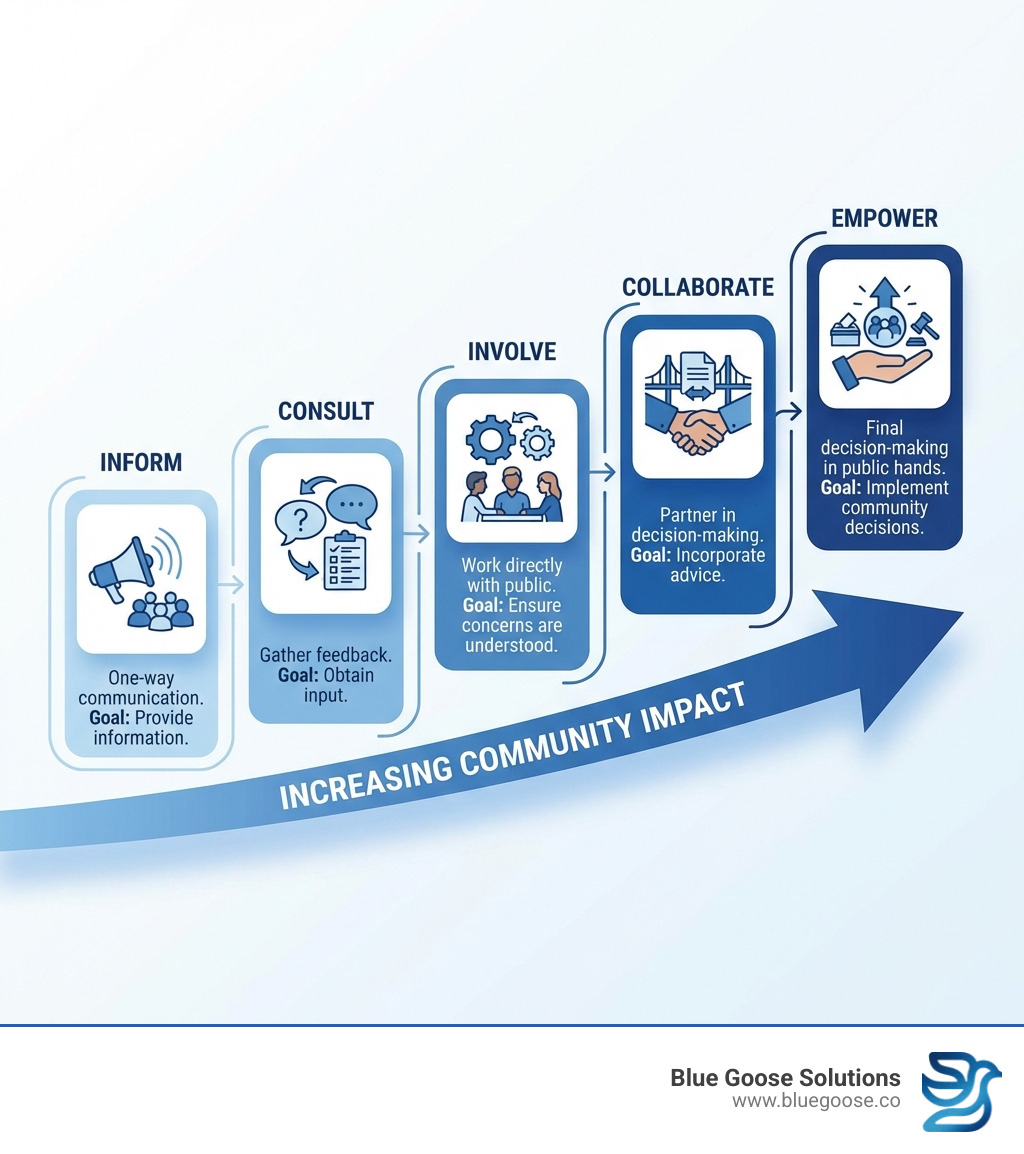
The Foundation: What Makes Community Engagement Successful?

At its heart, successful community engagement is about creating genuine connections and fostering a two-way dialogue that leads to meaningful outcomes. It moves beyond simply informing the public to truly involving them in the decision-making process. As we've learned, "authentic public engagement is the cornerstone of achieving success in public sector projects." This authenticity is what differentiates impactful engagement from superficial efforts that merely "check a box."
For us, a truly effective community engagement agency understands that communities possess invaluable insights. We believe that "communities have valuable insights about how infrastructure can improve their daily lives; we cannot build truly successful projects without these insights." This means moving beyond one-sided communication to actively listening to and gathering information from participants. When we craft public involvement plans, we purposefully emphasize listening and learning, considering alternatives, evaluating key priorities, and defining shared community values.
The benefits of such an approach are multifold. For projects, soliciting and understanding community feedback fosters support and facilitates the decision-making process, ultimately contributing to project success and community buy-in. It helps us find that crucial balance between technical information, community values, and public sentiment. For organizations, it's a vital risk mitigation strategy. Proactive stakeholder engagement is critical in navigating complex regulatory environments and evolving public expectations, helping to identify and address risks before they arise. Moreover, it builds trust and credibility, protecting against unwarranted reputational threats.
When engagement is done well, it’s not just a process; it’s a pathway to better, more sustainable solutions. It ensures that the project not only serves its intended purpose but also genuinely improves the daily lives of those it impacts, creating a lasting positive legacy.
The Role of Equity and Inclusivity
Equity and inclusivity are not just buzzwords; they are non-negotiable principles for contemporary community engagement. We firmly believe that "the best decisions are made when the most voices are heard," and this means actively working to include those who have been historically marginalized or excluded from planning processes.
Applying an "equity lens to all engagement approaches" is fundamental. This ensures that opportunities to provide feedback exist for all community members, regardless of age, ethnicity, race, income, or mobility. Our commitment to social justice means we focus on developing effective strategies that result in healthy, just, and equitable communities. We understand that "public engagement that is culturally aware and equity based has become a focus of many infrastructure and planning projects today."
Engaging vulnerable communities and under-represented groups requires intentional effort and culturally aware practices. This often involves collaborating with partner agencies, community-based organizations, and social service agencies to facilitate participation. For example, in our work around Washington D.C., including areas like Oxon Hill, Maryland, Alexandria VA, and Fort Washington, we recognize the diverse demographics and unique needs of each neighborhood.
To truly remove barriers, we carefully consider accessibility in all our engagement activities. This includes ensuring ADA compliance for meeting locations, but also extends to practical considerations like time of day, transportation options, parking availability, childcare, and even providing refreshments to make in-person meetings as accessible and welcoming as possible. Equitable outreach also means tailoring our communication methods to effectively reach individuals who have been historically excluded from the conversation, ensuring their perspectives are not just heard, but valued and integrated.
The Role of a Community Engagement Agency in Fostering Trust
Trust is the bedrock of any successful community engagement effort. Without it, even the most well-intentioned projects can falter. A skilled community engagement agency acts as a bridge, fostering credibility and respect between stakeholders and clients. Our approach centers on building this trust through meaningful engagement and clear, transparent communication.
One of the most critical aspects of building trust is transparency, particularly through "closing the feedback loop." This means not only diligently gathering public input but also explicitly demonstrating how that input influenced decisions. This practice is not just a best practice; it's often a regulatory requirement for federal funding and other purposes. By relaying the public's input and detailing how it shaped outcomes, we build confidence in the project team and agency. We ensure meeting and comment summaries are publicly posted and shared, fostering accountability and demonstrating that voices truly matter.
Effective stakeholder mapping and relationship building are also paramount. We help clients understand stakeholder expectations, engage with them productively, and address concerns during project design, planning, and decision-making. Our goal is to facilitate "authentic, respectful engagement that facilitates enduring relationships with your community partners." This involves developing comprehensive stakeholder databases and actively seeking their assistance in reaching their members, building lasting connections rather than transactional interactions.
Furthermore, a key role of a community engagement agency is conflict mitigation and consensus building. Many projects, particularly in public sectors, can be met with apprehension or controversy. When these conflicts are not addressed properly, they can lead to project delays and unsuccessful outcomes. Our team has extensive experience working with communities to mitigate and resolve conflicts, opening lines of communication and implementing transparency to build trust. We employ techniques like card storming and deliberative polling to facilitate opportunities for consensus building, aiming to reduce misunderstandings and bridge divides to find common ground. Our goal is to move beyond one-off conversations to create long-term solutions that genuinely meet community needs.
How to Select the Right Community Engagement Agency

Choosing the right community engagement agency is a critical decision that can significantly impact the success of your mission. It's not just about finding someone who can talk to people; it's about partnering with experts who understand the nuances of community dynamics, regulatory landscapes, and the art of translating complex ideas into actionable, community-driven solutions. You deserve more than "chameleon consulting" or agencies that offer "superficial engagement." You need specialized expertise with deep roots and a proven track record.
When evaluating potential partners, look for an agency that prioritizes authenticity and impact. They should demonstrate a clear understanding that their role extends beyond mere communication to genuinely shaping community projects, programs, and policies. Ask about their regulatory knowledge, especially concerning federal and state processes that might impact your projects. While our specific geographic focus is on areas like Oxon Hill, Maryland, Washington D.C., Alexandria VA, and Fort Washington, the principles of navigating complex regulatory environments are universal.
Consider their team capabilities. Does the agency comprise skilled facilitators, designers, and social scientists who can bring diverse perspectives and methodologies to the table? Do they have a clear mission that aligns with yours? For instance, Blue Goose Solutions specializes in supporting mission-based teams, clarifying messages, growing reach, and building support for purpose-driven organizations. We offer flexible support models, from strategic coaching to full-scale implementation, designed to meet your unique needs.
Lastly, look for a proven commitment to social impact. For example, some agencies pursue B Corp certification, signifying their adherence to rigorous standards of social and environmental performance, accountability, and transparency. This demonstrates a dedication to making a meaningful impact on stakeholders and communities, aligning with the values of purpose-driven organizations. You can learn more about our approach and values by visiting our About Us page.
Tailoring Strategies for Diverse Communities
Effective community engagement is never a one-size-fits-all endeavor. What works in one neighborhood or for one demographic may not resonate in another. A top-tier community engagement agency understands this and excels at tailoring strategies to the unique needs of diverse communities and project requirements.
This customization begins with data-driven outreach. We develop comprehensive outreach strategies based on a thorough analysis of the project area's demographics. This allows us to reach not only as many people as possible but also a group that is truly representative of the demographic study area, including harder-to-reach populations through innovative methods. Whether it's property owners, business owners, renters, travelers, institutions, or interest-based organizations, we strive to encourage broad participation.
Our approach involves reaching community members "where they live, work, and play." This might include leveraging grassroots organizing techniques, working with community-based organizations, or even conducting facilitated site walks and education sessions. For example, in the diverse communities of Washington D.C. or Oxon Hill, Maryland, understanding local gathering spots, cultural norms, and preferred communication channels is essential. We customize tools and activities to suit specific engagement needs, ensuring that the methods are as diverse as the communities themselves.
Essential Skills of a Top-Tier Community Engagement Agency
The success of a community engagement agency hinges on a robust set of skills and capabilities that go far beyond basic communication. These skills enable them to steer complex human dynamics, manage intricate projects, and ultimately deliver impactful results.
Here is a list of key capabilities we embody:
- Strategic Planning: The ability to develop dynamic and responsive engagement strategies that help organizations make informed decisions and shape community projects, programs, and and policies. This includes crafting comprehensive public involvement plans that purposefully engage the community.
- Stakeholder Mapping: Identifying and understanding all relevant stakeholders, their interests, influence, and potential concerns. This research forms the basis for targeted and effective outreach.
- Facilitation: Expert meeting facilitation skills are crucial. This involves active listening, asking clarifying questions, transparent note-taking, and skilled conflict mitigation to manage group dynamics and secure decisions that allow projects to move forward.
- Digital Outreach: Proficiency in leveraging modern digital tools for broader reach and engagement, including social media, online surveys, virtual platforms, and interactive web meetings.
- Impact Measurement: The capacity to define clear goals, metrics, and indicators for engagement efforts, and to conduct pre/post evaluations to assess the effectiveness and social impact of interventions.
- Equity-Centered Design: A commitment to designing engagement processes that are inherently inclusive, accessible, and culturally aware, ensuring that all voices, especially those traditionally excluded, are heard and valued.
Furthermore, strong communications expertise is indispensable. This means not just conveying information but explaining complicated transportation and infrastructure projects in an informative, understandable, and visually compelling manner. Our full creative staff of graphic designers and communication professionals works to make technical information accessible. Effective messaging and compelling storytelling are vital for getting people to participate and fostering support. Robust research skills, including qualitative and quantitative methods, are also key to gathering valuable insights from diverse populations and demographics.
Modern Engagement in Action: From Digital Tools to Impact Measurement
The landscape of community engagement is constantly evolving, particularly with the rapid advancements in digital technology. Today, a leading community engagement agency must adeptly steer both traditional in-person methods and innovative digital tools to maximize reach and effectiveness. The opportunities are vast, but so are the challenges, including ensuring equitable access across the digital divide. We accept hybrid models, recognizing that a blend of approaches often yields the most comprehensive and inclusive engagement.
Measuring the success and impact of these efforts is paramount. It moves beyond simply counting attendees or comments to understanding the qualitative shifts in community sentiment, the level of buy-in, and the tangible influence on project outcomes. This requires defining clear goals, metrics, and indicators from the outset. For nonprofits and government agencies, robust research and evaluation are not just good practice; they are essential for accountability, demonstrating impact to funders and constituents, and continuously improving programs.
Leveraging Digital Tools for Broader Reach
The digital age has revolutionized how we connect with communities, offering unprecedented opportunities for broader reach and more innovative engagement. A forward-thinking community engagement agency is skilled at leveraging these tools to their full potential.
Virtual open houses, interactive maps, online surveys, and social media engagement are now critical components of a comprehensive engagement strategy. These platforms can reach people on their own time, making participation more convenient and accessible. For instance, interactive web meetings and 360 visualizations can communicate complex technical information in an engaging and understandable way. We know that "online collaboration is a critical way to share and gather information," and we tailor online collaboration strategies to maximize information exchange.
However, leveraging digital tools also presents challenges, particularly in overcoming the digital divide. Not everyone has equal access to high-speed internet or the necessary devices. Therefore, a balanced approach is key, ensuring that digital efforts complement, rather than replace, traditional in-person engagement, especially in underserved communities within our service areas like Fort Washington or Alexandria VA.
Communicating Complexity and Measuring What Matters
One of the persistent challenges in community engagement is effectively communicating complex technical information to the public. Whether it's intricate infrastructure plans or scientific data, simplifying this information without diluting its accuracy is an art. We work with clients to explain complicated projects in an informative, understandable, and visually compelling manner. This often involves using visualizations, infographics, and clear language to illustrate technical terminology and ideas, making materials more comprehensible for residents.
Beyond effective communication, measuring what truly matters is crucial for demonstrating value and fostering continuous improvement. This means moving beyond vanity metrics to focus on qualitative feedback analysis, assessing shifts in public perception, and evaluating the tangible influence of community input on project decisions. "Relaying the public’s input and detailing how that input influenced decisions helps build trust in the project team and agency."
Our approach emphasizes comprehensive reporting and monitoring, which includes compiling public outreach summaries that detail the type, amount, and outcome of engagement efforts. For organizations like nonprofits and government agencies, this data is vital for compliance, accountability, and demonstrating the social impact of their work. We use research tools and analyze community data alongside residents to produce actionable findings, ensuring that engagement efforts lead to evidence-based solutions.
For more insights into effective communication and engagement strategies, we encourage you to Read our blog for more insights.
Conclusion: Partnering for Purpose and Lasting Impact
As we've explored, effective community engagement is far more than a procedural step; it's a strategic imperative for any purpose-driven organization seeking to create lasting positive change. It's about building trust, fostering meaningful relationships, ensuring inclusivity, and integrating diverse voices into decision-making processes. The right community engagement agency serves as a vital partner in this journey, bringing specialized expertise, innovative tools, and a deep commitment to equitable outcomes.
We've seen that authentic engagement leads to project success, community buy-in, and risk mitigation. We've highlighted the critical role of equity and inclusivity in reaching vulnerable and under-represented communities, and the importance of a community engagement agency in fostering trust through transparency and conflict resolution. We've also examined how modern engagement leverages both traditional and digital tools, and how measuring true impact moves beyond simple metrics to profound qualitative understanding.
Choosing a partner that aligns with your mission and values is paramount. At Blue Goose Solutions, we specialize in supporting mission-based teams—nonprofits, public agencies, and CSR initiatives—to clarify their messages, grow their reach, and build essential support. We understand the unique challenges and opportunities within areas like Washington D.C., Oxon Hill, Maryland, and Alexandria VA, and we are dedicated to empowering communities to create lasting change.
By investing in strategic, equitable, and authentic community engagement, you're not just running a project; you're building a legacy of collaboration and impact.
To learn more about how we help purpose-driven organizations succeed, and to separate fact from fiction in nonprofit marketing, explore our insights: Learn how to separate fact from fiction in nonprofit marketing.
