
The Definitive Guide to Nonprofit Marketing Strategies
What is Nonprofit Marketing and Why It Matters

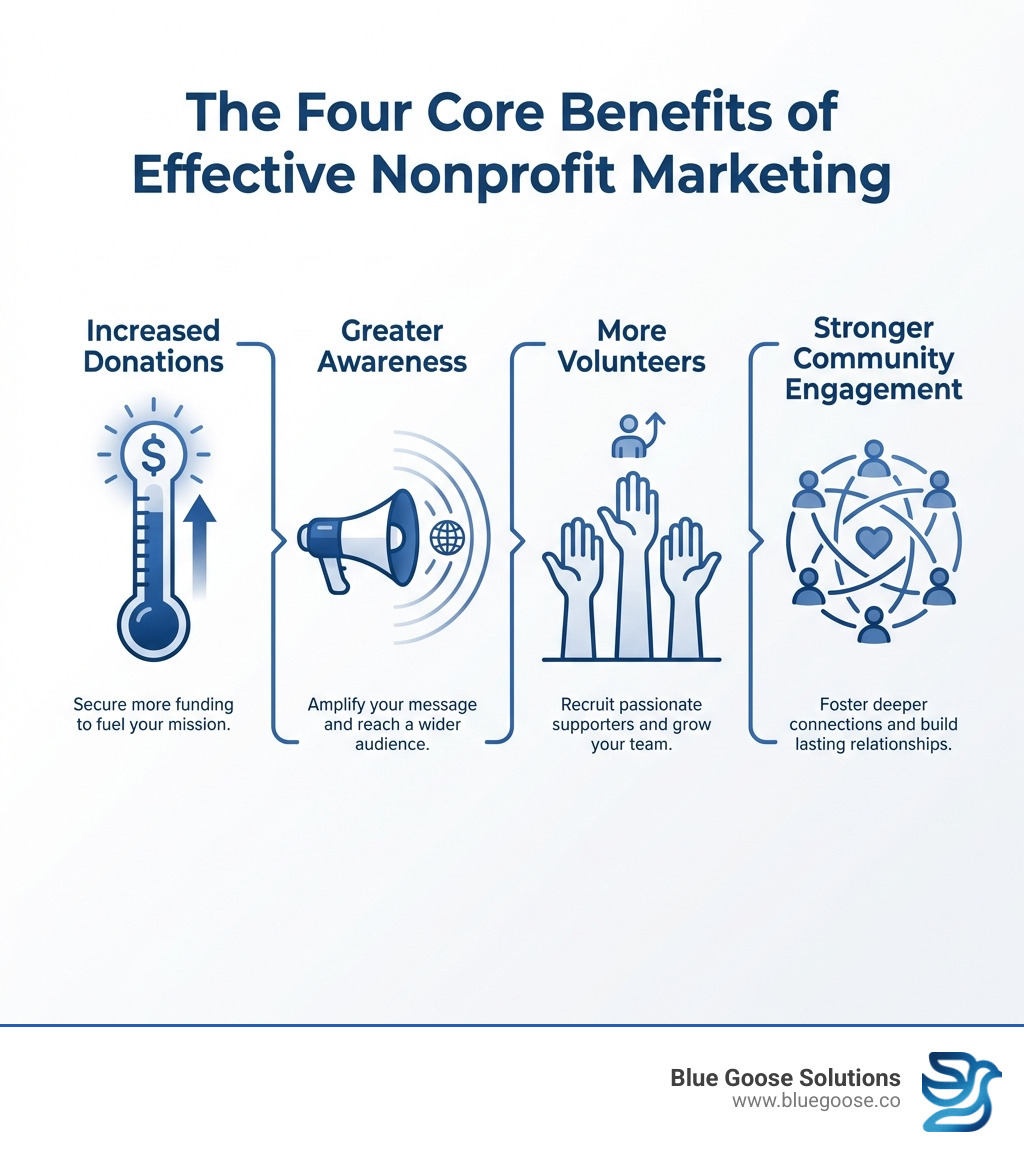
Nonprofit marketing is the strategic use of marketing tactics to amplify your organization's mission, attract donations, recruit volunteers, and promote your services to the communities you serve. It's how you connect with the people who care about your cause and turn that connection into lasting support.
Quick Answer: What is Nonprofit Marketing?
- Definition: Marketing strategies nonprofits use to promote their mission, attract donations, and recruit supporters
- Core Purpose: Rally support, increase awareness, foster donor relationships, and drive fundraising
- Key Difference: Centers around mission impact rather than profit, but uses similar channels (social media, email, websites)
- Main Channels: Website/SEO, social media, email campaigns, events, partnerships, and storytelling
- Budget Reality: Google offers eligible nonprofits $10,000/month in free ad credits through Google Ad Grants
If people don't know your organization exists, they can't help you. Many nonprofits fall into a one-off approach to marketing—launching scattered campaigns without an overarching strategy—which wastes precious time and resources on tactics that don't move the needle.
Effective nonprofit marketing isn't about ads. It's about connection. It's about shifting your message from organizational achievements to what your audience cares about. Instead of saying "We provide after-school tutoring to over 1,000 students annually," you say "For a working mom with two jobs and no time to help with homework, our tutors mean her son doesn't fall behind in school."
This guide will walk you through building a comprehensive marketing strategy that works, even with limited resources. You'll learn how to define your audiences, leverage free tools, optimize your digital presence, and create campaigns that drive measurable results.
I'm Jason R.L Wallace, Chief Marketing Officer at Blue Goose Solutions. With 15 years of experience helping mission-driven organizations, I've seen how strategic nonprofit marketing can scale impact. This guide provides practical strategies to amplify your mission, whether you're a team of one or a growing organization.
The Power of Effective Nonprofit Marketing
The purpose of any nonprofit is to make a positive impact. To achieve that, you need support from donors, volunteers, board members, and sponsors. This is where effective nonprofit marketing becomes indispensable.
Nonprofit marketing is a holistic approach that includes gathering information for decision-making and managing relationships with various stakeholders. It encompasses strategies to amplify your mission, attract donations, promote services, and recruit volunteers.
Here's why it's so important for organizations like yours in Oxon Hill, Washington D.C., Alexandria VA, and Fort Washington:
- Rallying Support for Your Cause: Marketing educates people about your mission and inspires them to join you, creating a consistent message across all your channels.
- Aiding Fundraising: Effective marketing campaigns are directly linked to raising donation revenue. Marketing fosters the relationships that encourage consistent giving, which is key for sustainable fundraising.
- Fostering Donor Relationships: One-time donations are not a sustainable fundraising source. Consistent marketing helps you build good relationships with donors, encouraging them to become long-term supporters. Personalization can significantly improve their experience and improve conversion rates.
- Recruiting Supporters and Volunteers: Marketing helps you attract the people power you need. Volunteers are twice as likely to donate as non-volunteers, so highlighting these opportunities can draw in dedicated individuals.
- Promoting Your Products and Services: Many nonprofits offer valuable programs or products. Marketing ensures these offerings reach the people who need them most.
- Quantifiable Success Measures: Nonprofit marketing campaigns help to raise donation revenue and program awareness. By tracking key performance indicators (KPIs), you can see what’s working and adjust your strategy accordingly.
A strong nonprofit marketing strategy empowers your organization to achieve its mission more effectively, creating a ripple effect of positive change in the community.
Building Your Comprehensive Nonprofit Marketing Strategy

When we talk about nonprofit marketing, we're not just throwing darts at a board. We're building a roadmap. Many organizations, especially those with tight budgets, fall into a reactive approach rather than planning proactively. Turning that scattershot approach into a coherent strategy will simplify your promotion efforts and secure more support.
A comprehensive nonprofit marketing strategy provides clear goals, a deep understanding of your audience, and cohesion across your team. It ensures every marketing action is directly related to a target that furthers your mission.
Step 1: Define Your Goals, Audience, and Message
Before you launch any campaign, you need to know where you're going, who you're talking to, and what you want to say.
Organizational Priorities: Start by identifying your core organizational priorities. Are you aiming to increase program participation, boost donor retention, or launch a new initiative? Your marketing objectives should flow directly from these overarching goals.
Setting SMART Goals: For each objective, set SMART goals: Specific, Measurable, Achievable, Relevant, and Time-bound. For example, instead of "get more donations," try "increase online donations by 15% from new donors in the next six months." This clarity helps track progress and measure success.
Audience Segmentation: Unlike for-profit businesses, nonprofits speak to a range of groups. At any given time, your outreach could be targeting multiple groups, including constituents, partners, volunteers, local governments, and donors.
To effectively engage these diverse groups, we need to segment our audiences. This means creating detailed personas—fictional representations of your ideal audience members—that include demographics, motivations, and communication preferences. A great way to organize these different groups is using a CRM to segment the different groups.
Identifying Stakeholders: Your stakeholders are anyone who has an interest in your organization, including donors, volunteers, board members, event attendees, and sponsors. Understanding their unique needs is crucial for tailoring your messages.
Developing a Core Message: What is the single most important thing you want people to know about your organization? Your core message should be clear, concise, and reflective of your mission. This message, along with your Mission-Driven Branding, should be consistent across all your communications, helping to build your image and reputation.
Step 2: Understand the Marketing Funnel
The marketing funnel is a conceptual framework for guiding your nonprofit marketing strategies. It helps target tactics and messages to the audiences most likely to take action. The marketing funnel consists of three main stages:
- Top-of-Funnel (Awareness): At this stage, your audience may not know your organization exists. The goal is to cast a wide net, build visibility, and introduce your mission. This involves content that educates and informs, such as blog posts and social media updates.
- Middle-of-Funnel (Consideration): Here, people are aware of your mission and are considering how they might get involved. They're seeking more information. Tactics might include email newsletters, in-depth website content, and personal stories that demonstrate impact.
- Bottom-of-Funnel (Conversion/Action): This is where supporters are ready to take a specific action, whether it's donating, volunteering, or attending an event. Your messages need to be clear, compelling, and include strong calls-to-action.
By understanding where each audience segment is in the funnel, we can tailor our tactics and messages appropriately, nurturing supporters on their journey from casual observer to dedicated advocate.
Step 3: Create Your Actionable Marketing Plan
With your goals, audience, and funnel strategy in place, it's time to build your nonprofit marketing plan. This plan serves as your playbook, detailing your campaign goals, how you'll reach them, and which channels you'll use.
Developing a Comprehensive Marketing Plan: A comprehensive plan keeps you focused and organized. This plan should include:
- Executive Summary: A brief overview.
- Mission and Goals: Your core purpose and objectives.
- Audience and Market Analysis: Details on your personas, segments, and the competitive landscape.
- SWOT Analysis: Strengths, Weaknesses, Opportunities, and Threats.
- Messaging and Channels: Your core message and the platforms you'll use.
- Budget and Resources: A clear allocation of funds and team capacity.
- Timeline and KPIs: A schedule with key performance indicators to track success.
Determining a Clear Budget: It’s easiest to keep costs down when you have a clear budget in mind. This way, you’ll know exactly how much you can spend on your nonprofit marketing and allocate your resources accordingly. Include costs for physical marketing collateral, software, and potential agency fees. A good practice is to include a contingency fund of 5-10% for unforeseen challenges.
Selecting Channels: This involves choosing the right mix of channels to reach your audiences at different stages of the funnel, including your website, social media, email, events, and more.
Planning Campaigns: Lay out specific marketing campaigns, including their objectives, target audiences, key messages, and the channels you’ll use. This is where your Online Fundraising Campaigns come to life.
Tracking Performance and KPIs: Double-check your data collection process. We need to track key metrics related to campaign goals (KPIs) to determine success. This means monitoring website traffic, conversion rates, donation amounts, volunteer sign-ups, and social media engagement.
Key Digital Channels for Nonprofit Marketing
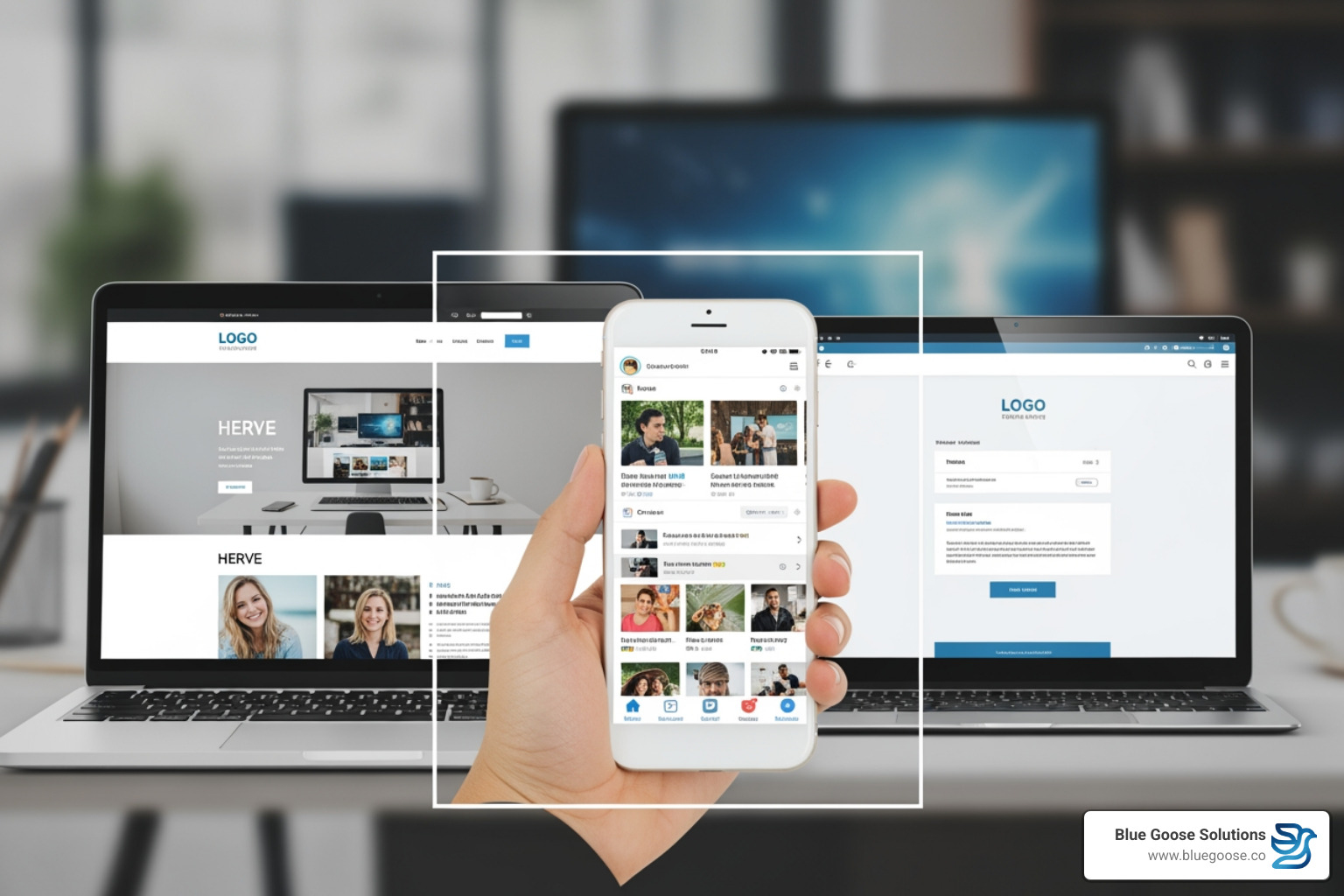
A robust online presence isn't just nice to have—it's essential. For nonprofits, leveraging digital channels is critical for clarifying messages, growing reach, and building support. This involves understanding the difference between inbound and outbound marketing and creating a cohesive digital ecosystem.
Inbound vs. Outbound Marketing:
- Inbound Marketing: This approach focuses on attracting supporters by creating valuable content and experiences. It's about drawing people in naturally. For nonprofits, Inbound marketing can help you attract new supporters and inspire your community. Channels include your website, SEO, blog, and social media.
- Outbound Marketing: This involves actively pushing your message out to specific audiences. Think traditional advertising, direct mail, and cold outreach. While often more expensive, it can be effective for targeted campaigns. Channels include digital ads, email campaigns, and direct mail.
The most effective nonprofit marketing strategies often blend both inbound and outbound techniques, creating an integrated digital ecosystem where all your channels work together.
Leveraging Your Website and SEO
Your website is your digital home base, a central hub for all your marketing assets and critical information. A well-designed, functional website is non-negotiable for any nonprofit today.
Nonprofit Website Design: Our Nonprofit Website Design emphasizes clarity, user-friendliness, and mobile-first design. A simple, mobile-friendly website with clear information on what you do, how people can help, and how to contact you is paramount.
Mobile-First Design: This isn't just a trend; it's a necessity. Pew Research estimates that 15% of American adults are "smartphone-only" internet users, and that number is rising. We must ensure every touchpoint, especially your donation pages, is mobile-optimized so supporters can make a gift on the spot. Classy, a nonprofit fundraising tech platform, stresses this importance.
Clear Calls-to-Action: Make it easy for visitors to take the next step. Whether it's "Donate Now," "Volunteer Today," or "Learn More," your calls-to-action should be prominent and guide users toward conversion.
SEO Best Practices: Search engine optimization (SEO) is crucial for increasing visibility and attracting supporters organically. SEO drives organic traffic to your website without the need for significant advertising spend. By optimizing your website’s content to rank higher in search engine results, you can connect with people actively searching for causes like yours. This involves using relevant keywords, creating high-quality content, and ensuring your site is technically sound. While you can make big SEO gains for free, some organizations partner with specialized agencies to reduce their workload and accelerate results.
Engaging Communities with Social Media
Social media is a powerful tool for building brand awareness, engaging with your audiences, and fostering a sense of community. Social platforms are great for sharing what you’re up to and listening to and interacting with your supporters.
Choosing the Right Platforms: To connect with as many people as you can, your organization should create social media accounts on several different platforms. Instagram, Facebook, and YouTube are great places to start. X (formerly Twitter), TikTok, and Snapchat also offer unique ways to engage with younger audiences. The key is to choose platforms where your target audience spends their time and tailor your content accordingly.
Content Strategy (Video, Images, Stories): Social platforms often favor quick, engaging content. Lean into images and video for maximum impact. Videos are better for eliciting emotion than static images, and they are processed 60,000 times faster than written content. The Girl Effect, a nonprofit empowering girls, uses video extensively on its homepage to capture attention.
User-Generated Content (UGC): Whether you’re fundraising or simply raising awareness, user-generated content (UGC) is integral to your marketing success. One study found that consumers find UGC 9.8 times more impactful than influencer content. Encourage your supporters to share their stories, photos, and videos related to your cause.
Community Engagement: Social media is a two-way street. Respond to comments, answer questions, and participate in conversations. This builds trust and strengthens relationships.
Social Media Advertising: If you don’t feel you’re reaching the correct audience organically, consider social media advertising. Facebook’s advertising platform allows you to set up campaigns that target people based on a variety of factors like age, gender, location, and interests.
Building Relationships Through Email and Storytelling
Email remains one of the most personal and powerful channels for nonprofit marketing, while storytelling is the heart of what we do as mission-driven organizations.
Email Marketing ROI: Email marketing remains one of the best ways to reach your audience. By one estimate, an email marketing campaign can deliver a return of $40 for every $1 spent. This incredible ROI makes it a cornerstone of any effective nonprofit marketing strategy. HubSpot emphasizes that making email sends an "always on" part of your strategy plays a big role in success.
Audience Segmentation and Personalization: Just like with other channels, segmenting your email list allows for more targeted and relevant communication. Use donor data and preferences to send personalized messages. This data is the key to creating personalized experiences for your donors, enhancing supporters’ experiences with your nonprofit and improving conversion rates.
Automation: Email marketing automation (like HubSpot) saves precious time and energy. You can automate welcome sequences for new donors, thank-you emails, and even re-engagement campaigns for lapsed supporters.
The Power of Storytelling: People connect with emotions and impact. This is where storytelling comes in. Instead of just listing statistics, share specific stories that evoke emotion. Using real names and photos (with permission) makes your story memorable and relatable. For example, instead of saying, "We provided 500 meals last month," tell the story of a specific family who received those meals and how it impacted their lives. Storytelling is the most powerful tool in your Digital Fundraising Strategy.
Highlighting Impact: Your stories should clearly communicate the impact of your work. This is crucial for building trust and demonstrating to supporters that their contributions make a tangible difference.
Thriving on a Budget: High-Impact, Low-Cost Strategies
We understand that resources can be tight for nonprofits in Oxon Hill, Washington D.C., Alexandria VA, and Fort Washington. The good news is that effective nonprofit marketing doesn’t have to break the bank. Many high-impact strategies are free or low-cost, focusing on efficiency and leveraging existing tools.
Opening up Free Advertising Opportunities
One of the most incredible resources available to eligible nonprofits is the Google Ad Grant.
Accessing Free or Discounted Advertising Programs: Google offers grants to help nonprofit organizations expand their reach through search ads. To start, you’ll need to qualify for a Google for Nonprofits account, which also grants you access to Google Workspace, YouTube’s nonprofit program, and other tools. Once approved, you can receive up to $10,000 per month in search advertising credits.
Eligibility Requirements: To qualify, your organization must be a registered 501(c)(3) nonprofit (or equivalent in other regions). Your website also needs to meet Google’s quality standards.
Campaign Ideas (Driving Donations, Recruiting Volunteers): With Google Ad Grants, you can promote various aspects of your organization, including:
- Educational content about your cause.
- Upcoming events and fundraising initiatives.
- Volunteer registration forms.
- Advocacy activities.
- Donation opportunities.
These grants allow you to create ads targeting multiple goals at once, driving qualified traffic to your website. If you need help managing this powerful resource, consider reaching out to a specialized agency.
Using Peer-to-Peer Fundraising and Partnerships
Peer-to-Peer (P2P) Campaigns: A peer-to-peer (P2P) campaign activates your supporters to become your fundraisers. With this strategy, you can ask regular donors to reach out to their friends, family, and others in their network to solicit support on behalf of your nonprofit. This allows your organization to reach people you may never have otherwise engaged with. Platforms like Facebook Fundraiser and Instagram Fundraiser make this easy.
Empowering Supporters to Fundraise: P2P fundraising empowers your most passionate supporters to share your story and mission within their personal networks, expanding your reach and credibility. It's a fantastic way to leverage word-of-mouth marketing.
Expanding Reach: This strategy is particularly effective for low-cost outreach, as your supporters do the heavy lifting of spreading the word.
Partnering with Local Businesses: Many companies are happy to pair up with a nonprofit to give back to their community. Look for opportunities to partner with local businesses in our area (Oxon Hill, Washington D.C., Alexandria VA, Fort Washington) for events, sponsorships, or donation matching. For example, you could partner with a local coffee shop to host a donation drive.
Securing Sponsors: For events or programs, securing sponsors can provide crucial funding and in-kind support, helping to cover costs and amplify your message. We need donors, volunteers, board members, event attendees, and sponsors to ensure that our nonprofit can serve its community.
Frequently Asked Questions about Nonprofit Marketing
How do I measure the ROI of my nonprofit marketing?
Measuring the Return on Investment (ROI) of your nonprofit marketing efforts is crucial for understanding what's working and demonstrating impact to stakeholders. While direct financial ROI can be harder to calculate than for for-profits, we focus on Key Performance Indicators (KPIs) that align with our mission.
Key Performance Indicators (KPIs):
- Website Traffic: Unique visitors, page views, time on page.
- Conversion Rates: Percentage of visitors who complete a desired action (e.g., donate, sign up, register).
- Donation Amounts: Total revenue, average donation size, number of recurring donors.
- Volunteer Sign-ups: Number of new volunteers, retention rates.
- Social Media Engagement: Likes, shares, comments, reach, follower growth.
- Email Metrics: Open rates, click-through rates, unsubscribe rates.
Using Analytics Tools: We use tools like Google Analytics and the analytics built into social media platforms to track these performance indicators. This data helps us understand supporter behavior, refine our messaging, and allocate resources more effectively. Performing fundraising audits helps us identify organization-wide trends and pinpoint opportunities for improvement.
What's the difference between nonprofit marketing and fundraising?
This is a common question! Think of it this way:
- Nonprofit Marketing is the broader strategy. It encompasses all activities you undertake to build awareness, educate the public, and cultivate relationships with stakeholders (donors, volunteers, partners). Its goal is to build trust and generate interest in your cause.
- Fundraising is a specific outcome of marketing. It's the direct act of soliciting and securing financial contributions. Fundraising is the "ask" that marketing prepares the ground for.
Nonprofit marketing supports fundraising by creating a pipeline of engaged supporters who are already familiar with and committed to your mission. You can't effectively fundraise without first marketing your cause.
How can a small nonprofit with one staff member handle marketing?
It's a common scenario for a small group to wear many hats. For small nonprofits, handling nonprofit marketing can feel overwhelming, but it's entirely doable by being strategic.
- Prioritize High-Impact Channels: You can't do everything, so focus on what gives you the most bang for your buck. Email marketing offers an incredible ROI, and social media is free to use. Prioritize a simple, mobile-friendly website and 1-2 social media platforms where your audience is most active.
- Focus on Consistency Over Quantity: It's better to consistently post good content a few times a week than to sporadically try to do too much. Authenticity and consistency build trust.
- Use Automation Tools: Leverage automation for tasks like email sequences (welcome, thank you, re-engagement). This saves precious time.
- Leverage Volunteers: Your passionate volunteers can be your best marketers! Empower them to share your stories and spread the word. Consider a peer-to-peer fundraising model.
- Access Free Nonprofit Marketing Courses: There are many free educational resources available. For example, you can Create My Free Account to access free nonprofit marketing courses that teach you how to communicate your cause and have a greater impact through email, social media, and public relations.
- Work with Experts (Strategically): If you can, invest in a strategic coaching session or a one-off project with an expert for guidance. For example, working with an SEO expert can help you make big gains with organic traffic.
The goal isn't to look professional in a corporate sense; it's to be trustworthy, relatable, and present. Tell stories, partner smart, show your impact, and keep showing up.
Conclusion: Propel Your Mission Forward
Effective nonprofit marketing is not just a series of tasks; it's a strategic imperative that fuels your mission. We've explored how understanding your goals, audiences, and the marketing funnel transforms scattered activities into a cohesive strategy. From your website and SEO to social media and storytelling, every channel plays a vital role in building support. And even on a limited budget, free tools like Google Ad Grants and strategies like peer-to-peer fundraising can significantly amplify your reach.
The core of successful nonprofit marketing lies in authentic connection. By focusing on empathy, transparency, and demonstrating the tangible impact of your work, you can build lasting relationships that translate into sustained support and profound change.
At Blue Goose Solutions, we specialize in helping purpose-driven organizations like yours in Oxon Hill, Washington D.C., Alexandria VA, and Fort Washington to clarify your message, grow your reach, and build the support you need. We offer flexible support models, from strategic coaching to full-scale implementation, ensuring your mission gets the attention it deserves.
For more insights into effective strategies and to separate common misconceptions from proven tactics, dig deeper into Nonprofit Marketing: Separating Fact From Fiction. Let's work together to propel your mission forward.
